How Not to Be Fooled · Chapter 6: One Study Is Not a Law
Cover
How Not to Be Fooled · Chapter 6
One Study Is Not a Law
Error bars, replication, and 'I'm not sure yet' as a complete sentence
Coin streaks, cherry-picked graphs, a second classroom, and a pocket list of questions. Jules learns that not being fooled means trusting the world a little more than the story — and checking twice.
12 panels · ~6 min read
Panel 1
Panel 2
Panel 3
Panel 4
Panel 5
Panel 6
Panel 7
Panel 8
Panel 9
Panel 10
Panel 11
Panel 12
Read chapter text: One Study Is Not a Law
Coin streaks, cherry-picked graphs, a second classroom, and a pocket list of questions. Jules learns that not being fooled means trusting the world a little more than the story — and checking twice.
Panel 1
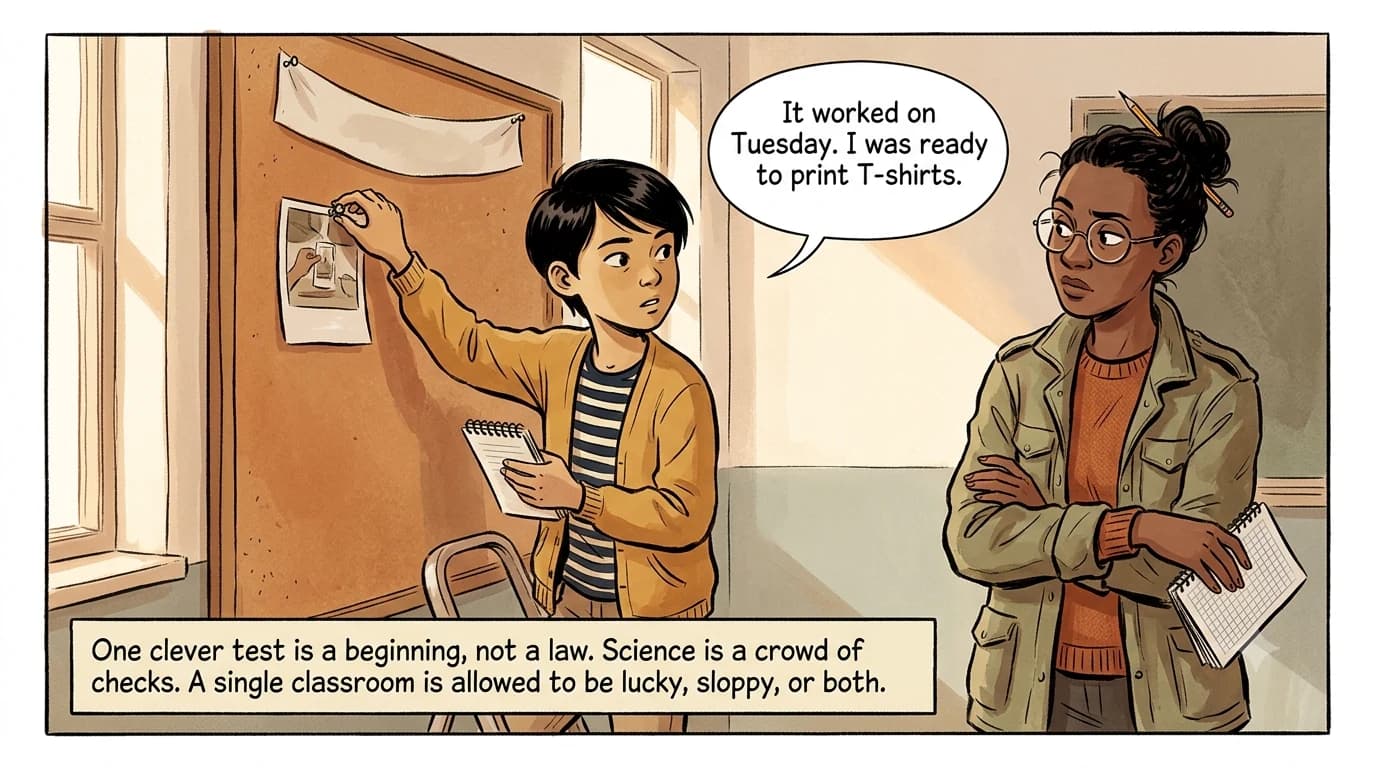
A kid pins a single classroom experiment on a bulletin board labeled as science, while a researcher looks unconvinced.
One clever test is a beginning, not a law. Science is a crowd of checks. A single classroom is allowed to be lucky, sloppy, or both.
Jules: It worked on Tuesday. I was ready to print T-shirts.
Panel 2
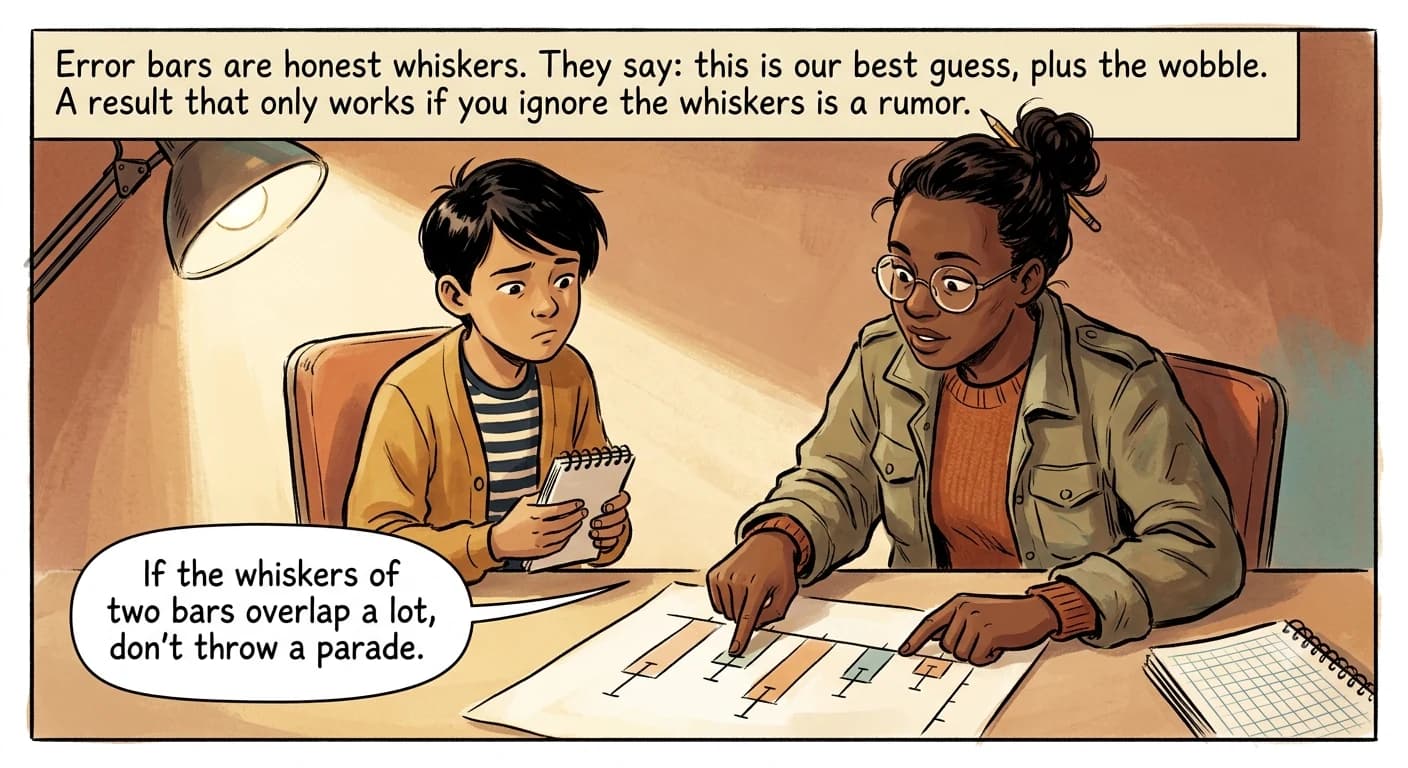
A simple bar chart of plant growth includes whisker-like error bars showing the measurement could be higher or lower.
Error bars are honest whiskers. They say: this is our best guess, plus the wobble. A result that only works if you ignore the whiskers is a rumor.
Nia: If the whiskers of two bars overlap a lot, don't throw a parade.
Panel 3
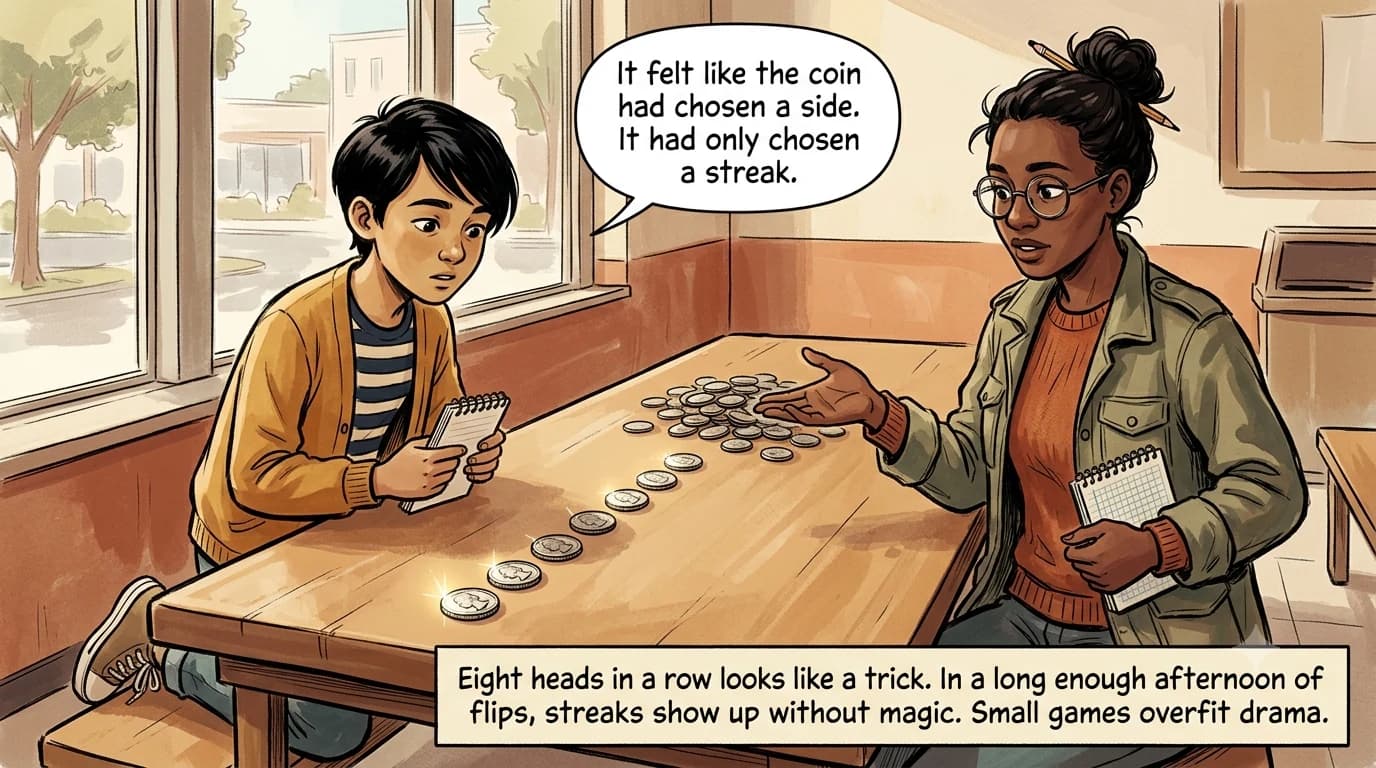
A kid stares at a streak of heads-up coins on a table while a researcher treats it as ordinary luck in a small sample.
Eight heads in a row looks like a trick. In a long enough afternoon of flips, streaks show up without magic. Small games overfit drama.
Jules: It felt like the coin had chosen a side. It had only chosen a streak.
Panel 4
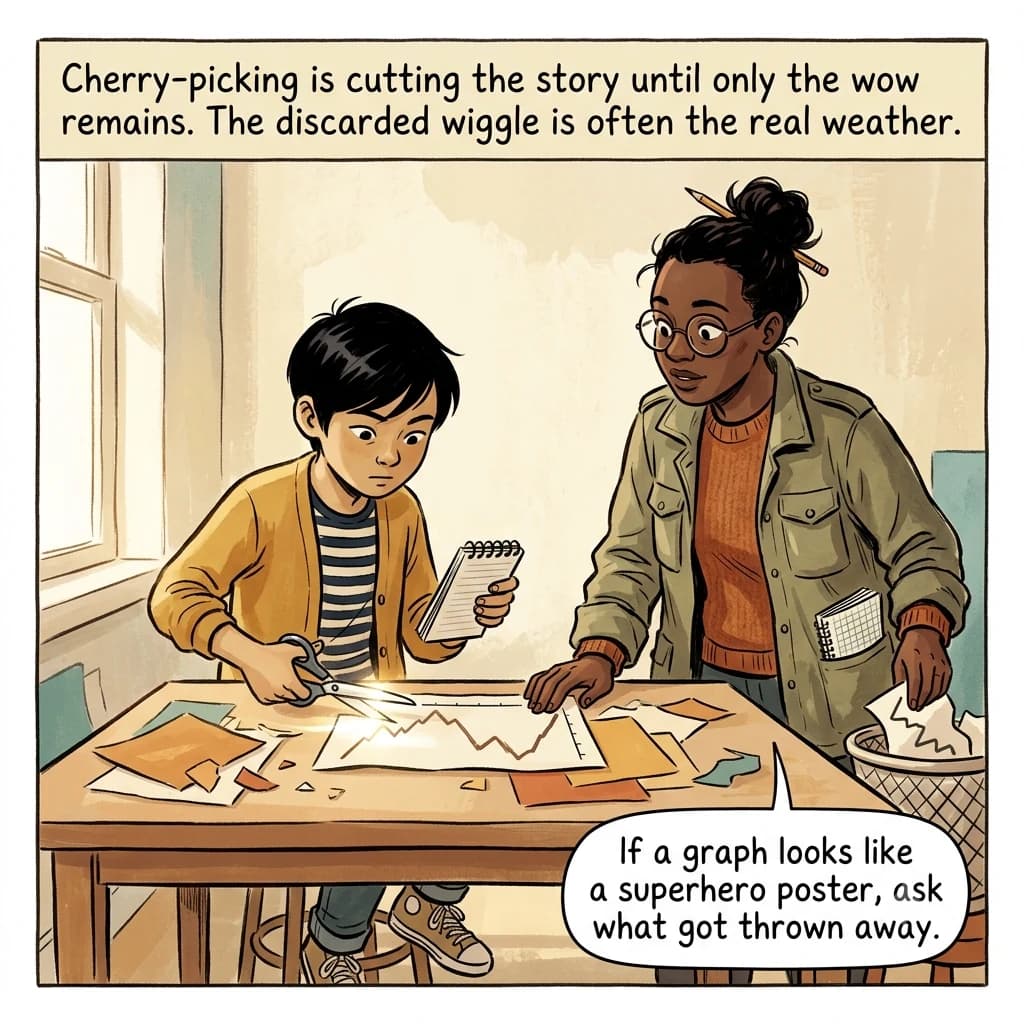
A kid cuts a wiggly chart down to one dramatic upswing and tosses the rest of the paper in a bin.
Cherry-picking is cutting the story until only the wow remains. The discarded wiggle is often the real weather.
Nia: If a graph looks like a superhero poster, ask what got thrown away.
Panel 5
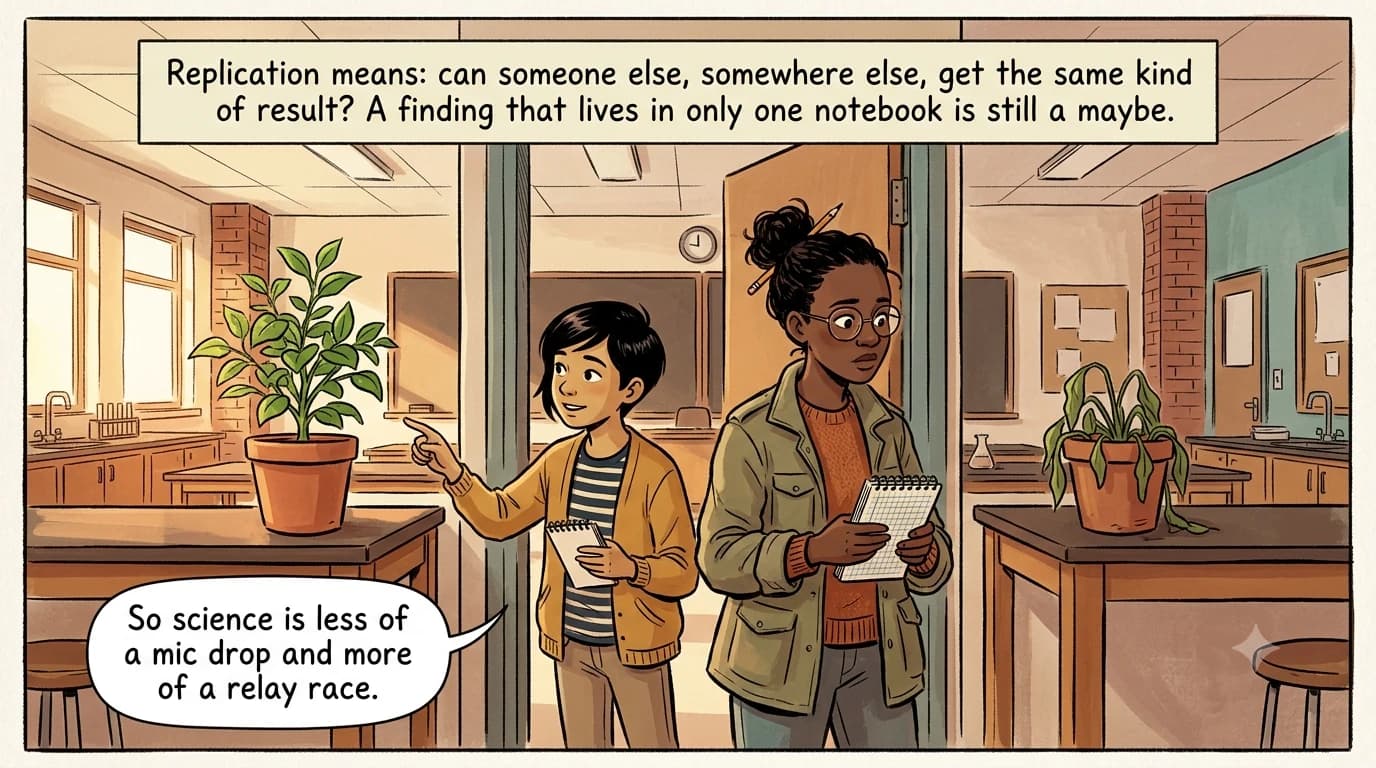
Two classrooms run the same plant experiment; one plant thrives and the other does not, showing the need to repeat tests.
Replication means: can someone else, somewhere else, get the same kind of result? A finding that lives in only one notebook is still a maybe.
Jules: So science is less of a mic drop and more of a relay race.
Panel 6
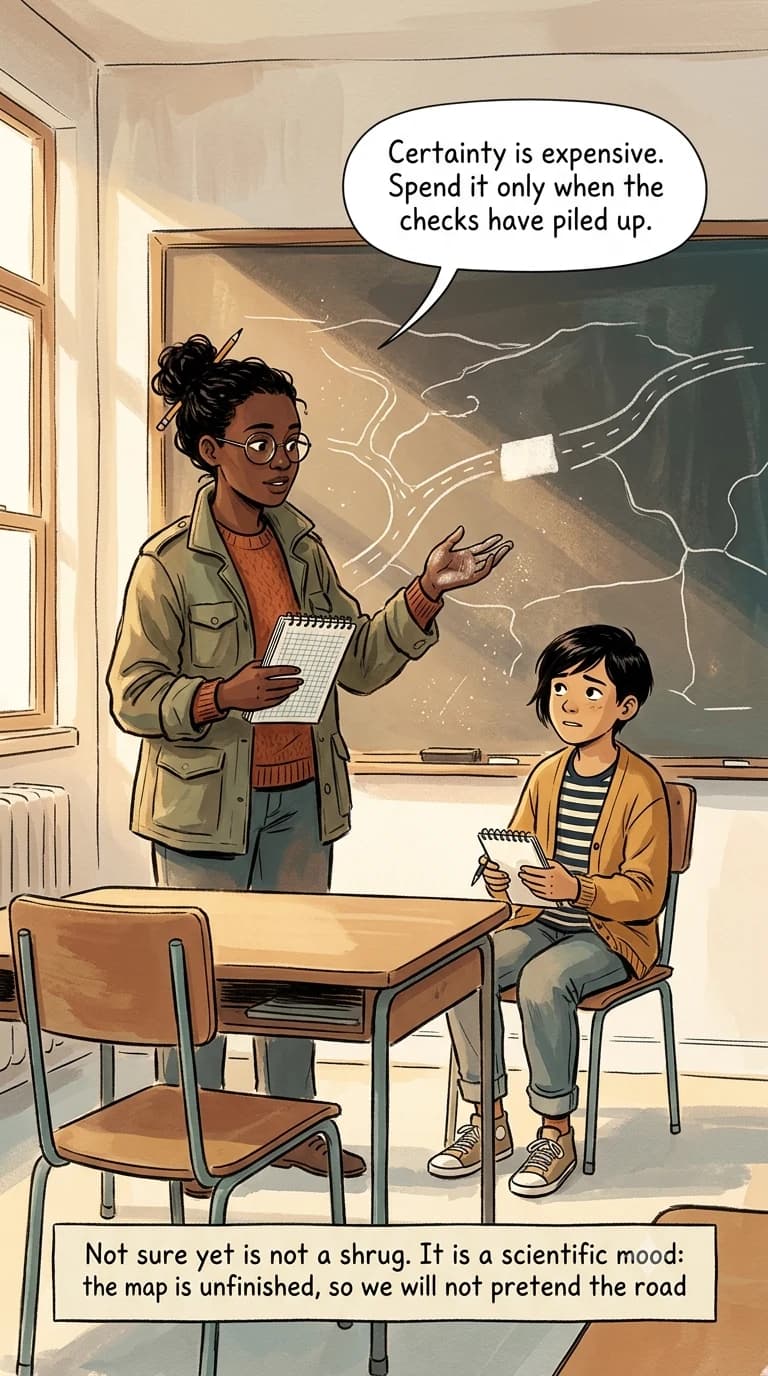
A researcher writes that she is not sure yet on a chalkboard, treating uncertainty as an honest scientific mood.
Not sure yet is not a shrug. It is a scientific mood: the map is unfinished, so we will not pretend the road is drawn.
Nia: Certainty is expensive. Spend it only when the checks have piled up.
Panel 7
A small cluster of twelve survey slips sits beside a gym floor covered in thousands of slips, showing sample size.
Twelve answers can point one way by accident. Twelve thousand still wobble, but less. Ask how many, not only what they found.
Jules: My pineapple poll of three was a leaf, not a forest.
Panel 8
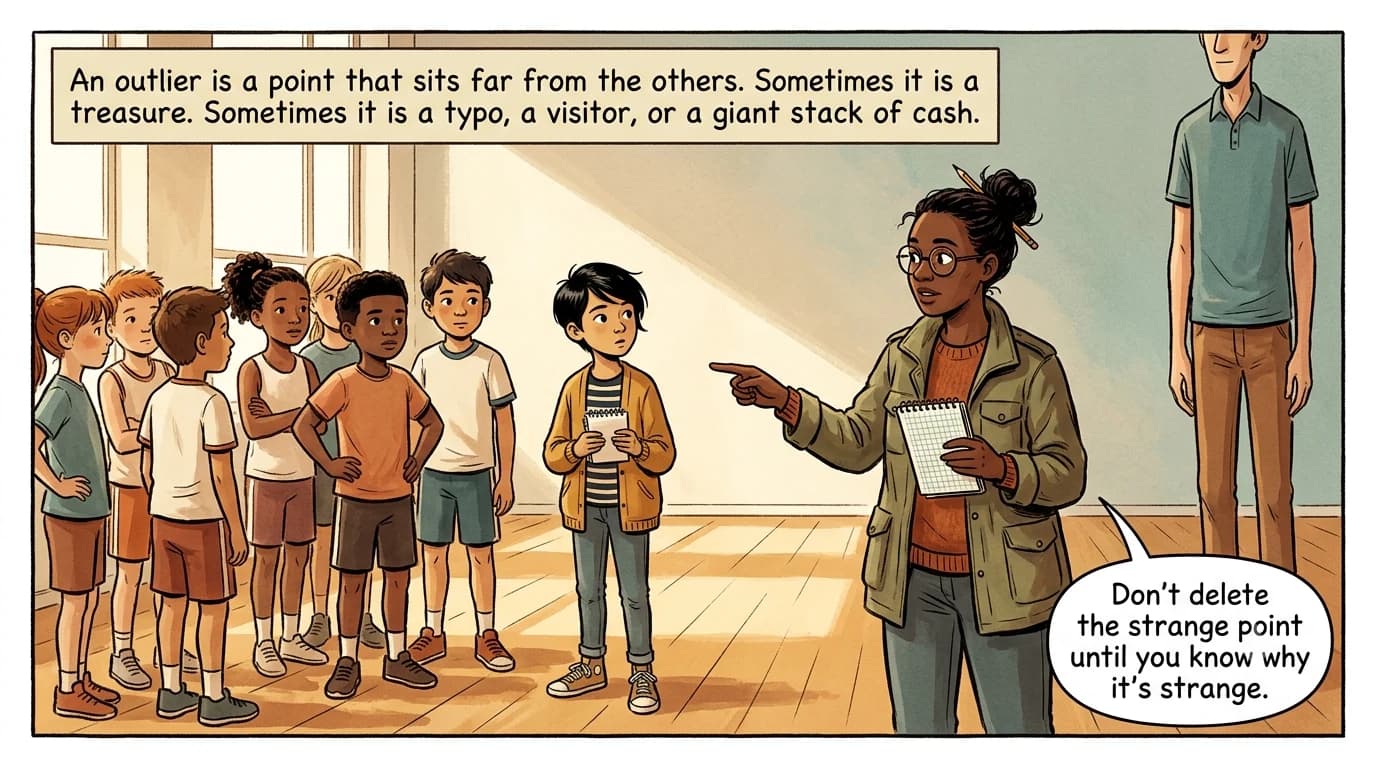
A height lineup of kids includes one extremely tall visitor standing apart, an outlier in the group.
An outlier is a point that sits far from the others. Sometimes it is a treasure. Sometimes it is a typo, a visitor, or a giant stack of cash.
Nia: Don't delete the strange point until you know why it's strange.
Panel 9
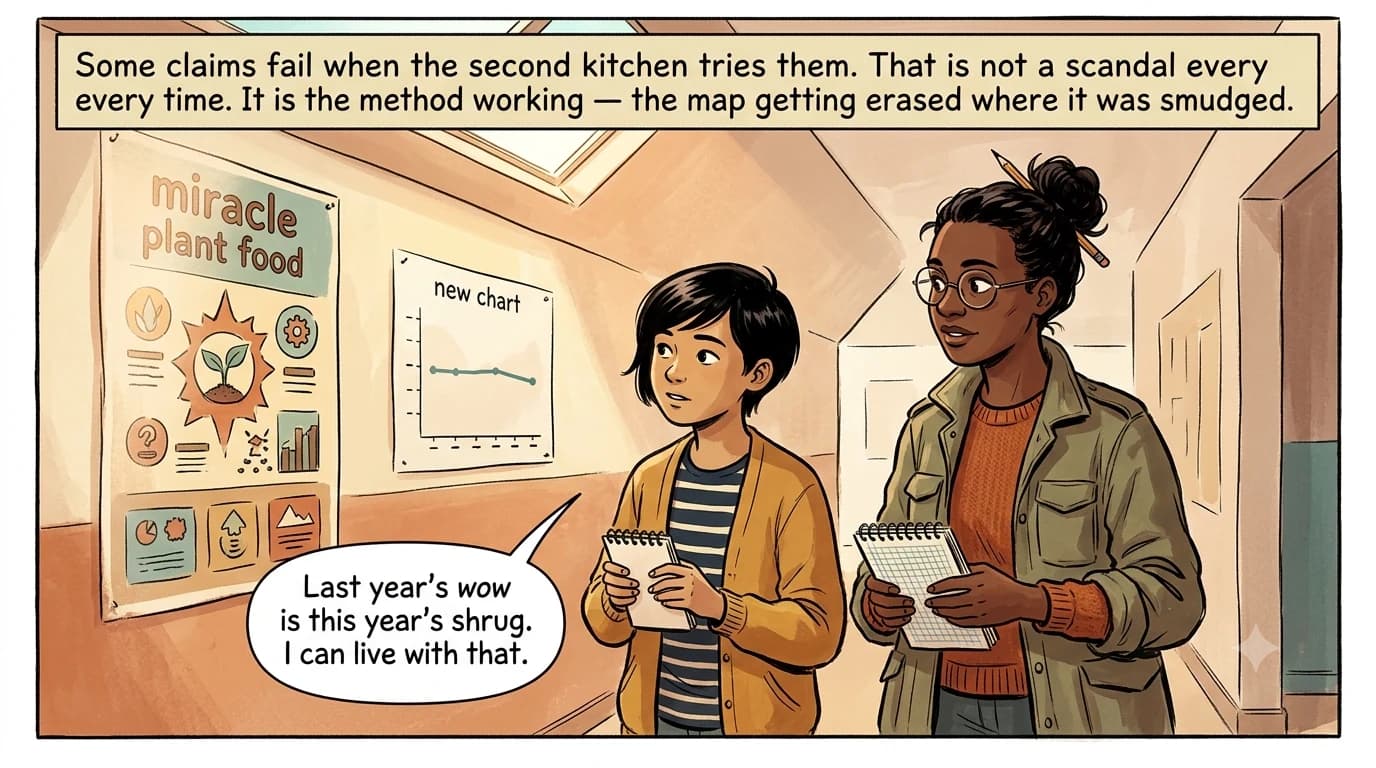
A faded miracle plant-food poster hangs beside a quiet follow-up chart that found almost no effect.
Some claims fail when the second kitchen tries them. That is not a scandal every time. It is the method working — the map getting erased where it was smudged.
Jules: Last year's wow is this year's shrug. I can live with that.
Panel 10
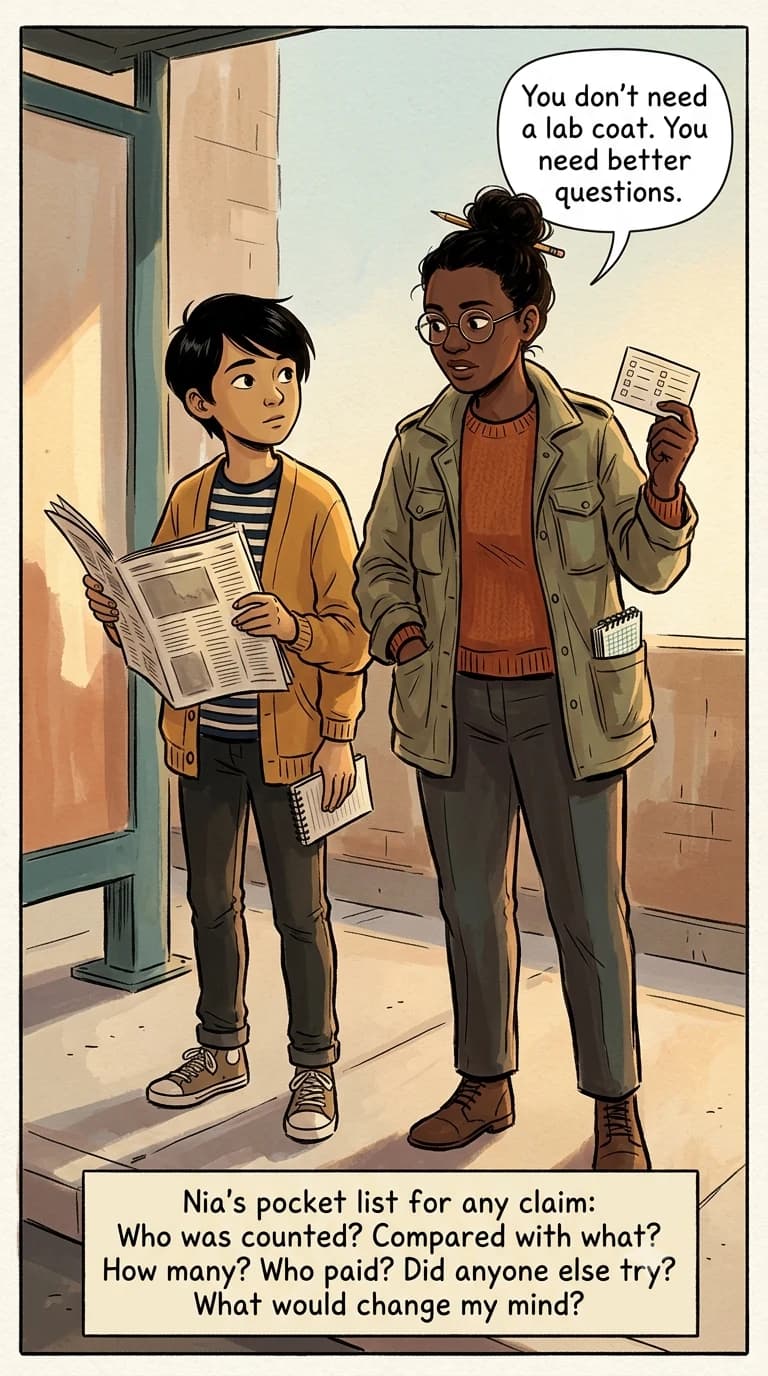
A kid reads a newspaper headline while a researcher holds a short pocket checklist of skeptical questions.
Nia's pocket list for any claim: Who was counted? Compared with what? How many? Who paid? Did anyone else try? What would change my mind?
Nia: You don't need a lab coat. You need better questions.
Panel 11
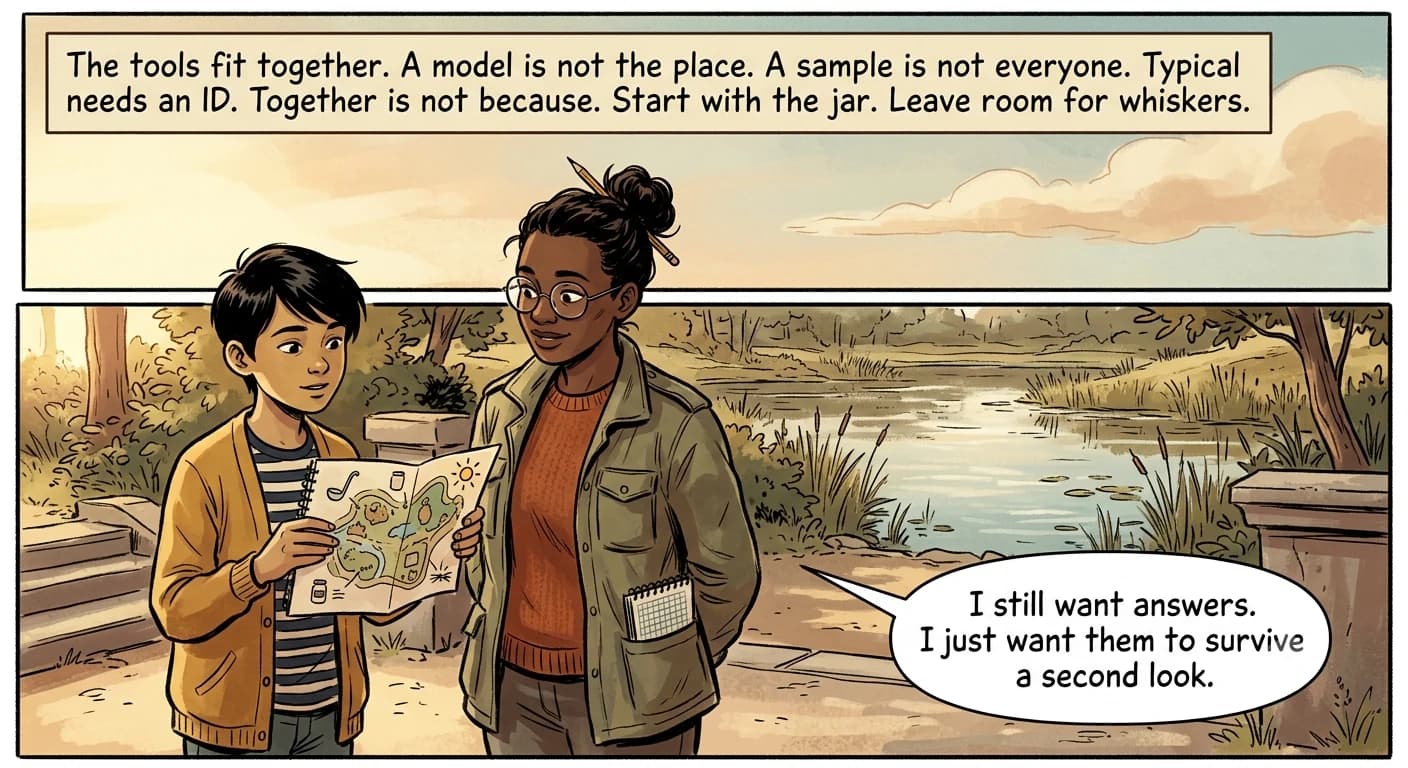
A kid annotates the original park map with notes about models, samples, averages, causes, and uncertainty.
The tools fit together. A model is not the place. A sample is not everyone. Typical needs an ID. Together is not because. Start with the jar. Leave room for whiskers.
Jules: I still want answers. I just want them to survive a second look.
Panel 12
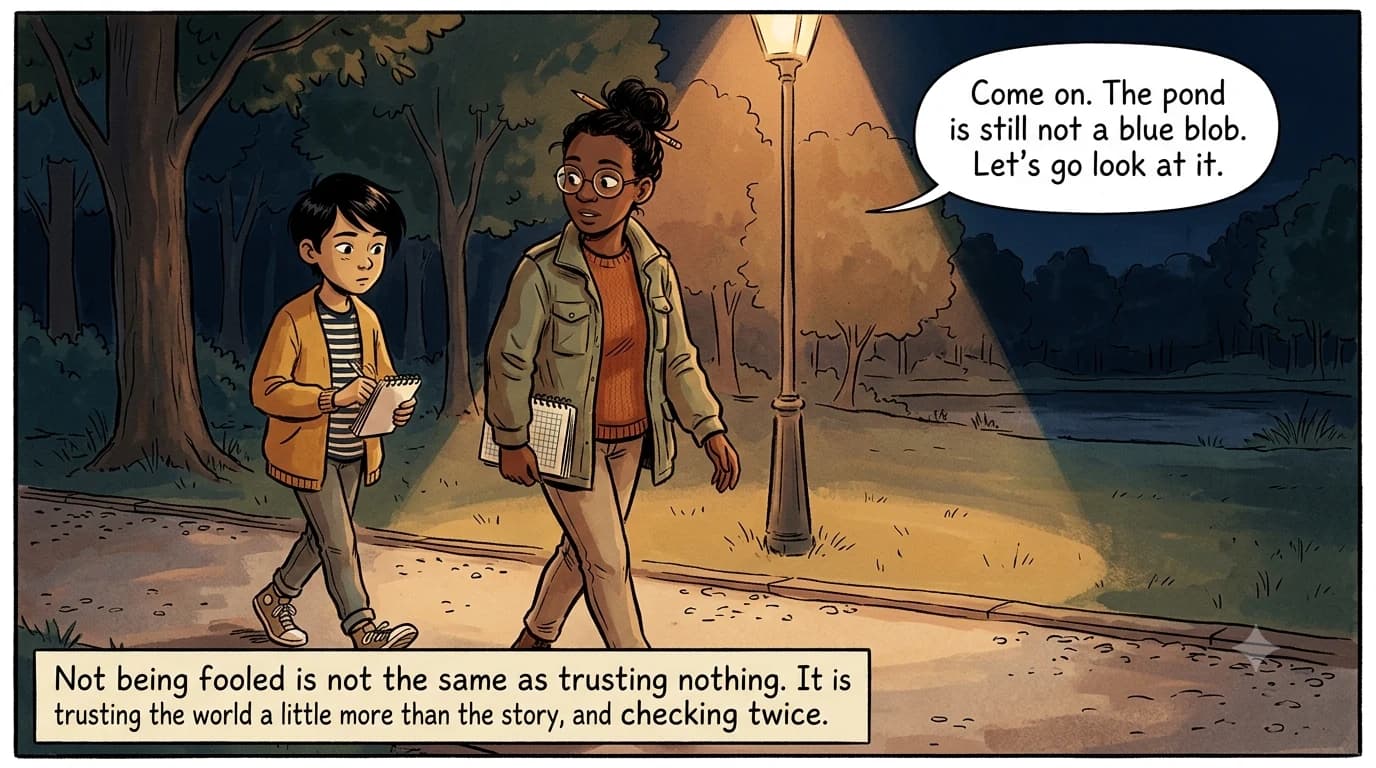
At night a kid closes a notebook while a researcher leads the way down a real park path toward the pond.
Not being fooled is not the same as trusting nothing. It is trusting the world a little more than the story, and checking twice.
Nia: Come on. The pond is still not a blue blob. Let's go look at it.