How Not to Be Fooled · Chapter 5: The Rare and the Loud
Cover
How Not to Be Fooled · Chapter 5
The Rare and the Loud
Base rates, scary headlines, and tests that still make mistakes
Sharks on magazine covers, a jar of marbles, a screening test, and a thirty-percent chance of rain. Jules learns to start with how common a thing was — before the drama arrives.
12 panels · ~6 min read
Panel 1
Panel 2
Panel 3
Panel 4
Panel 5
Panel 6
Panel 7
Panel 8
Panel 9
Panel 10
Panel 11
Panel 12
Read chapter text: The Rare and the Loud
Sharks on magazine covers, a jar of marbles, a screening test, and a thirty-percent chance of rain. Jules learns to start with how common a thing was — before the drama arrives.
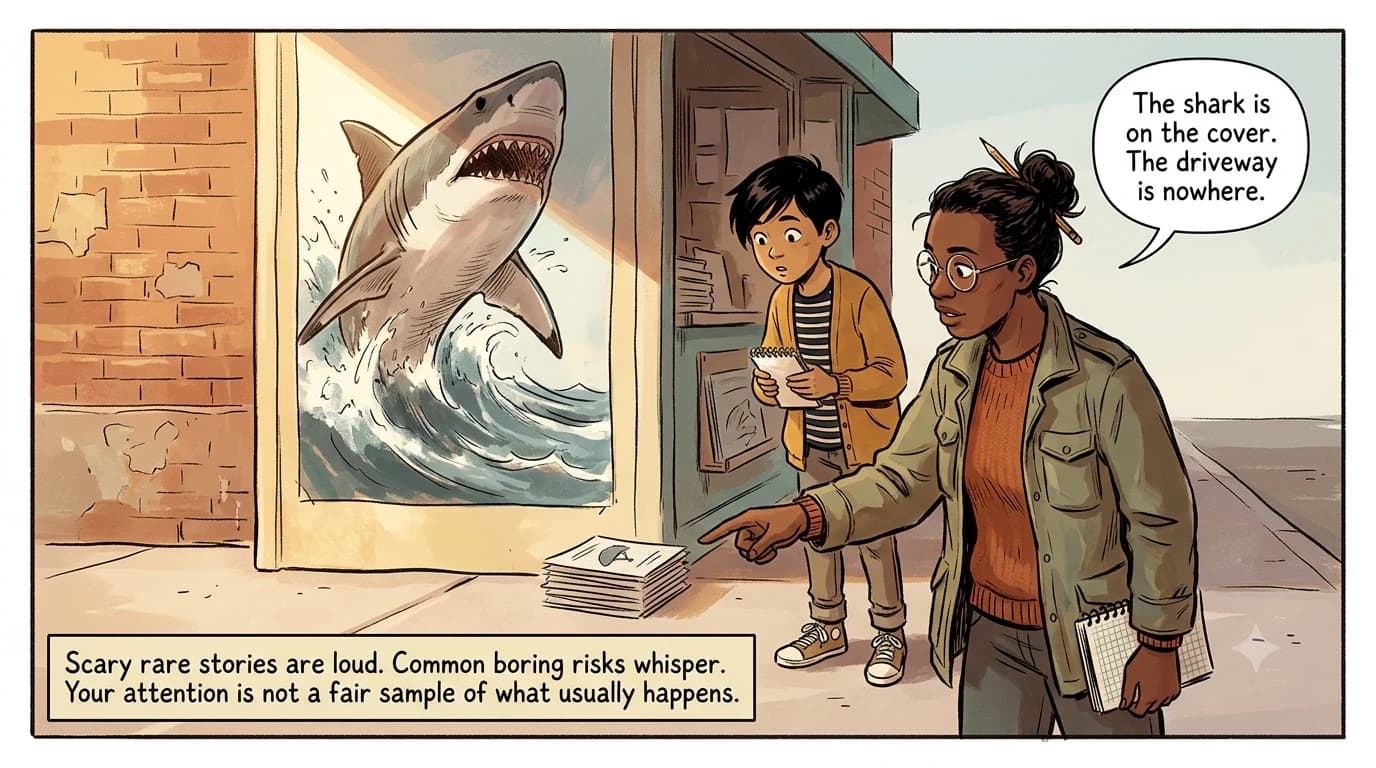
Panel 1
A newsstand displays a huge dramatic shark poster while a small stack of ordinary traffic-safety pamphlets sits ignored.
Scary rare stories are loud. Common boring risks whisper. Your attention is not a fair sample of what usually happens.
Jules: The shark is on the cover. The driveway is nowhere.
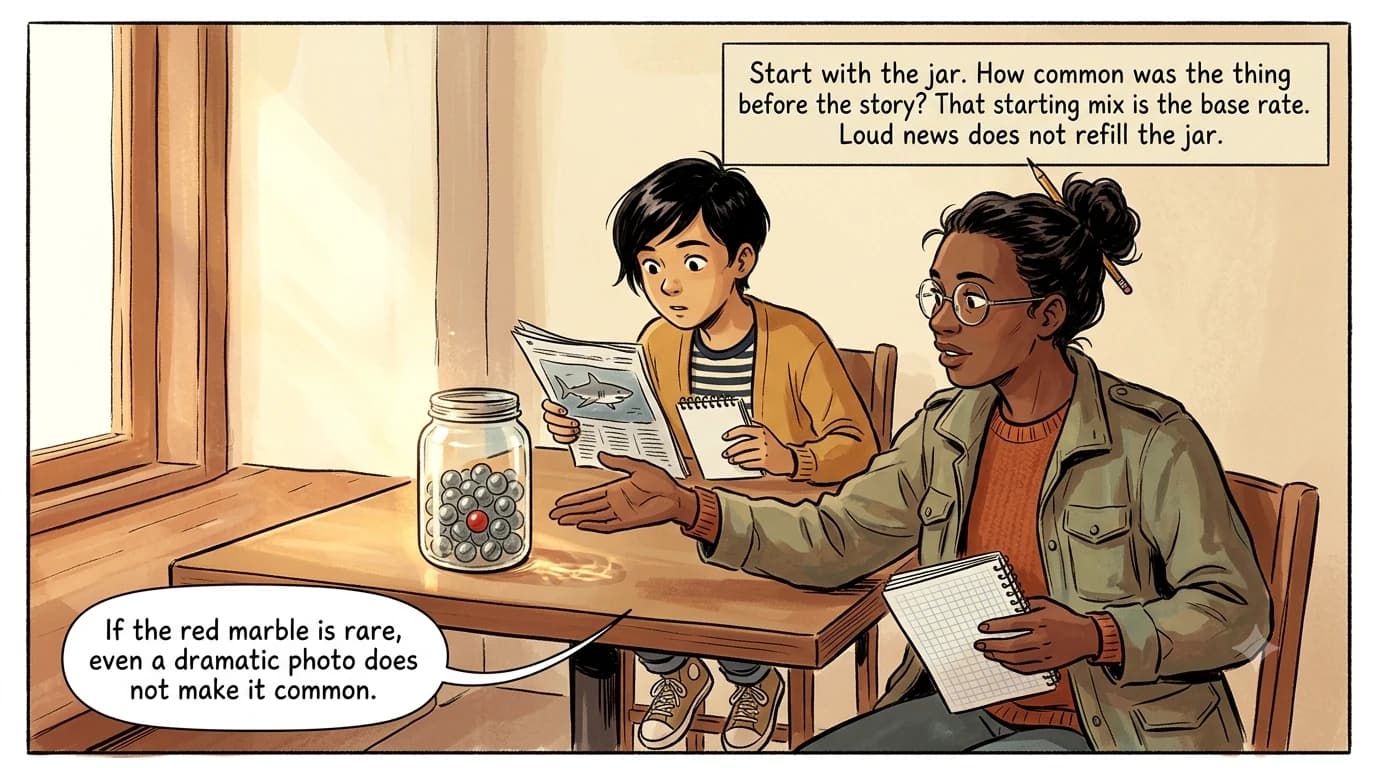
Panel 2
A researcher sketches a huge jar of grey marbles with a single red marble to show how rare a scary event can be.
Start with the jar. How common was the thing before the story? That starting mix is the base rate. Loud news does not refill the jar.
Nia: If the red marble is rare, even a dramatic photo does not make it common.
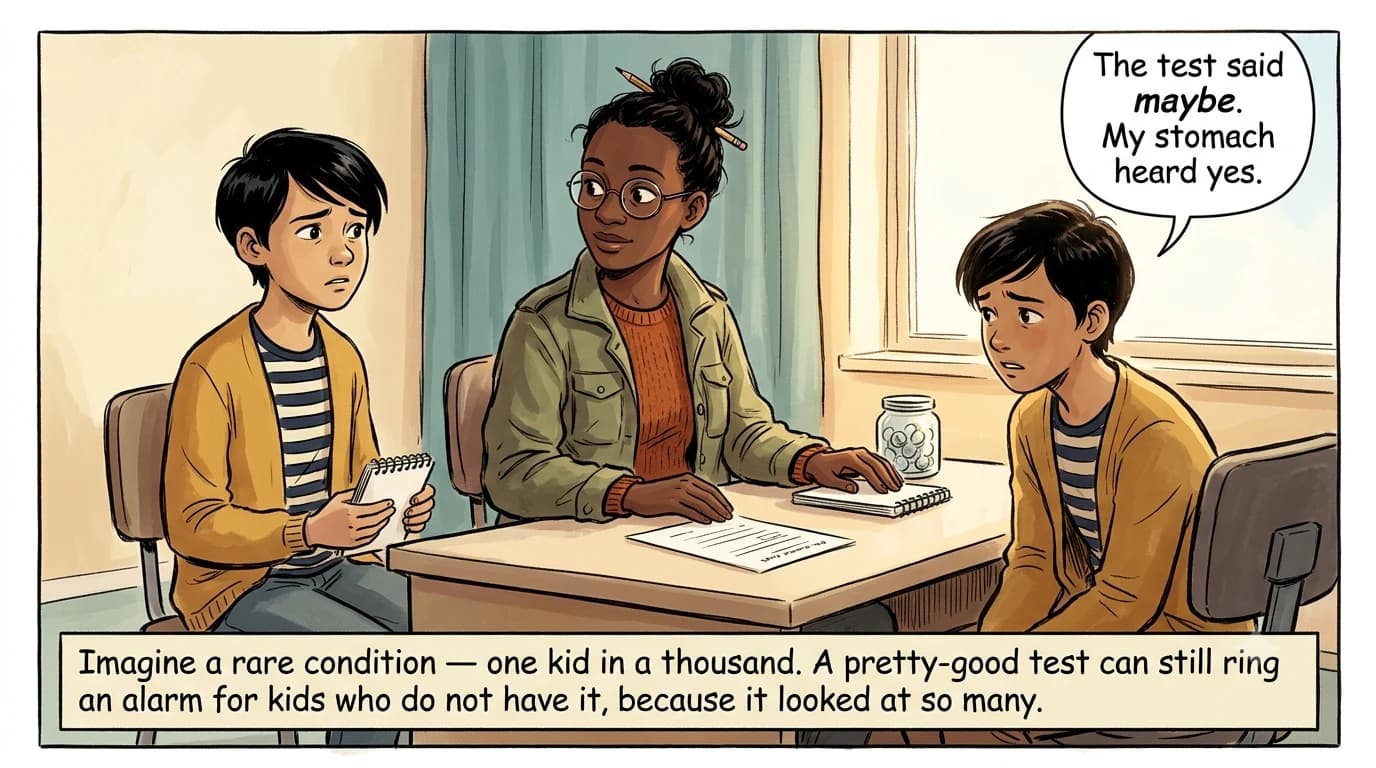
Panel 3
At a school nurse table, a kid reacts to a screening result while a researcher stays calm about what the test can mean.
Imagine a rare condition — one kid in a thousand. A pretty-good test can still ring an alarm for kids who do not have it, because it looked at so many.
Jules: The test said maybe. My stomach heard yes.
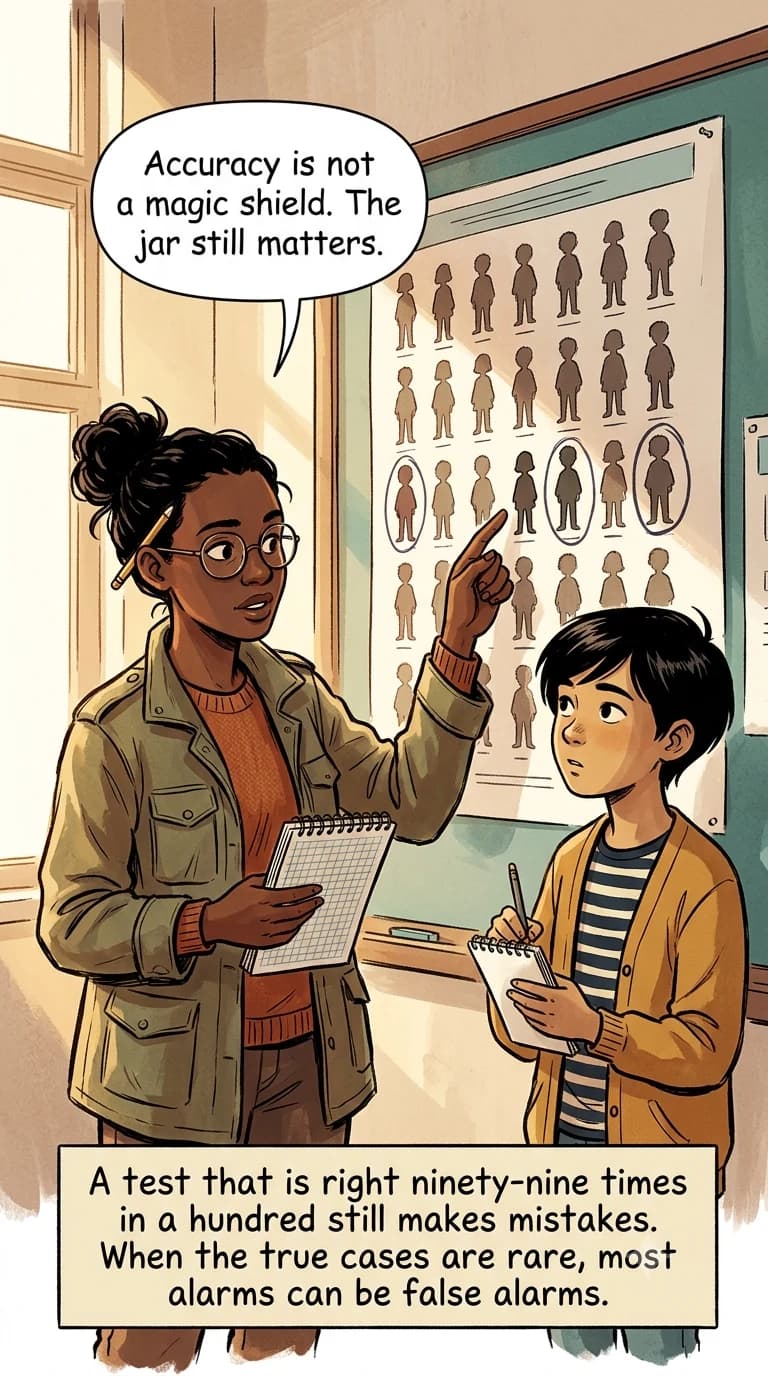
Panel 4
A wall chart of a thousand small figures with one true case and several false-alarm circles from an imperfect test.
A test that is right ninety-nine times in a hundred still makes mistakes. When the true cases are rare, most alarms can be false alarms.
Nia: Accuracy is not a magic shield. The jar still matters.
Panel 5
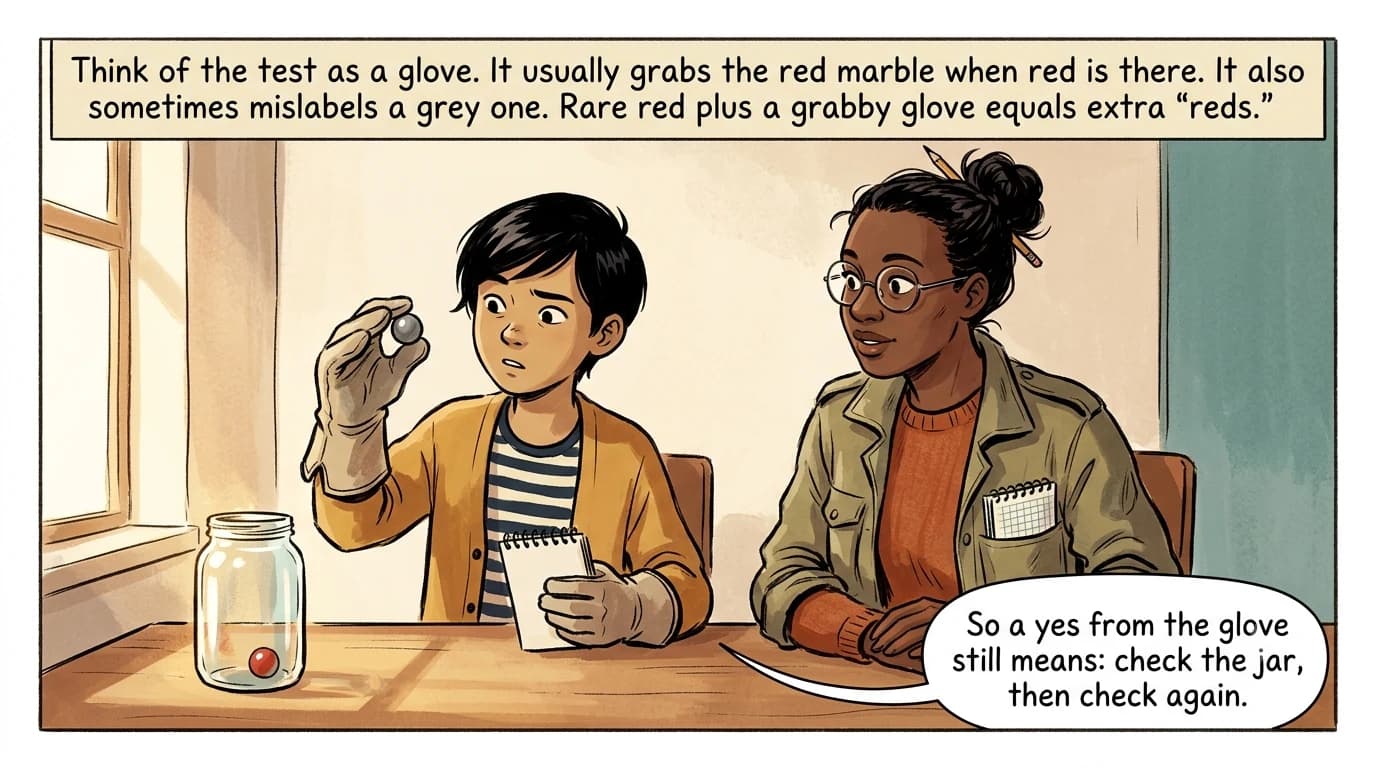
A kid wearing an oversized test-glove reaches into a jar of grey marbles and one red marble, sometimes mislabeling grey as red.
Think of the test as a glove. It usually grabs the red marble when red is there. It also sometimes mislabels a grey one. Rare red plus a grabby glove equals extra 'reds.'
Jules: So a yes from the glove still means: check the jar, then check again.
Panel 6
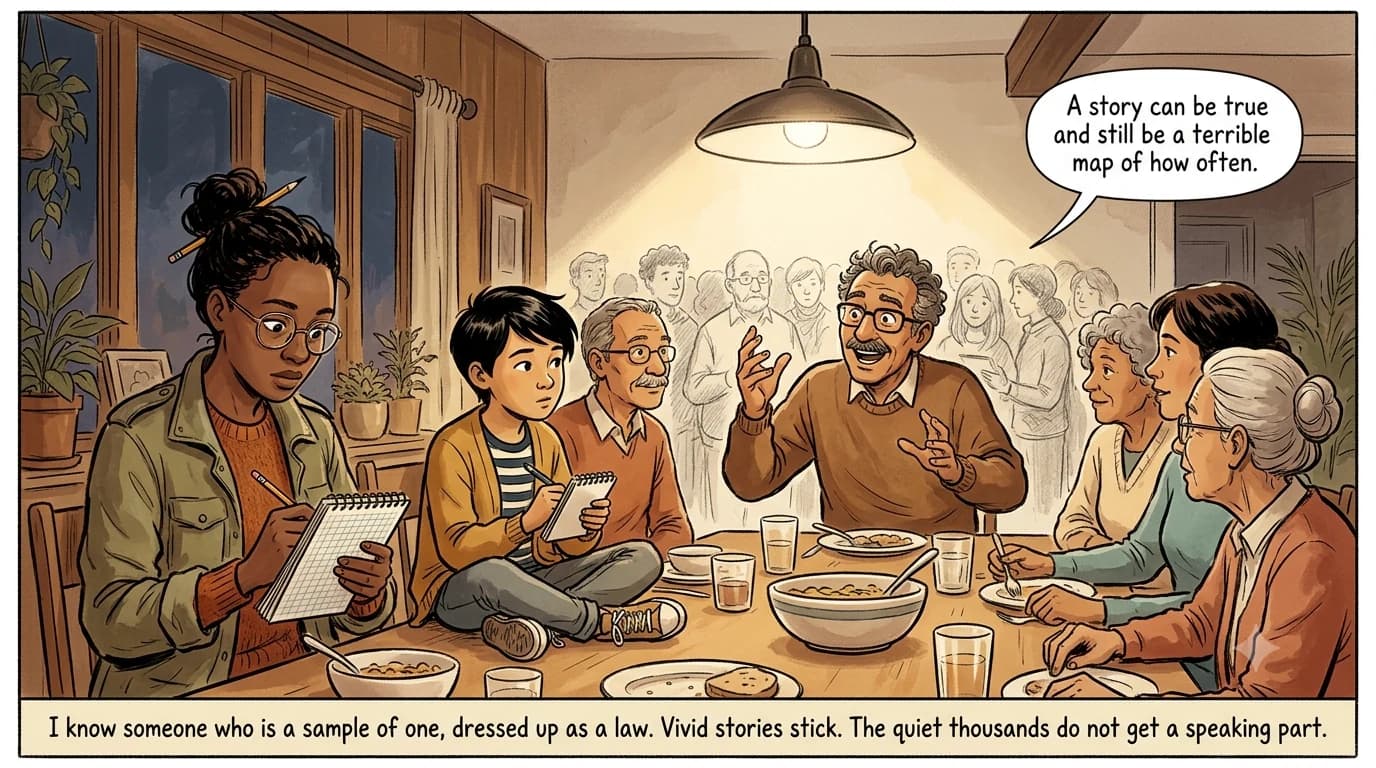
At a family table someone tells a vivid personal story while a researcher sketches a huge quiet crowd standing behind them.
I know someone who is a sample of one, dressed up as a law. Vivid stories stick. The quiet thousands do not get a speaking part.
Nia: A story can be true and still be a terrible map of how often.
Panel 7
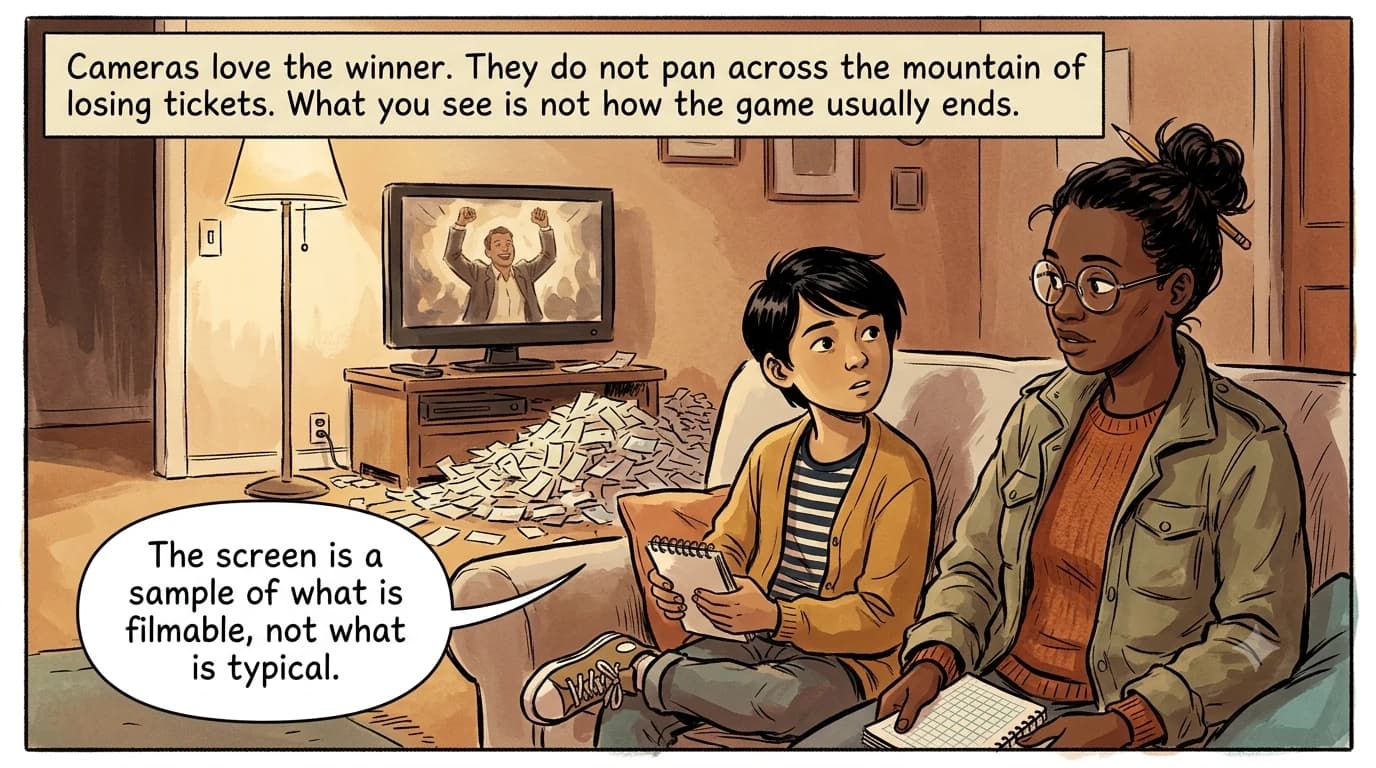
A television shows one lottery winner under confetti while a mountain of losing tickets sits ignored beside the TV.
Cameras love the winner. They do not pan across the mountain of losing tickets. What you see is not how the game usually ends.
Jules: The screen is a sample of what is filmable, not what is typical.
Panel 8
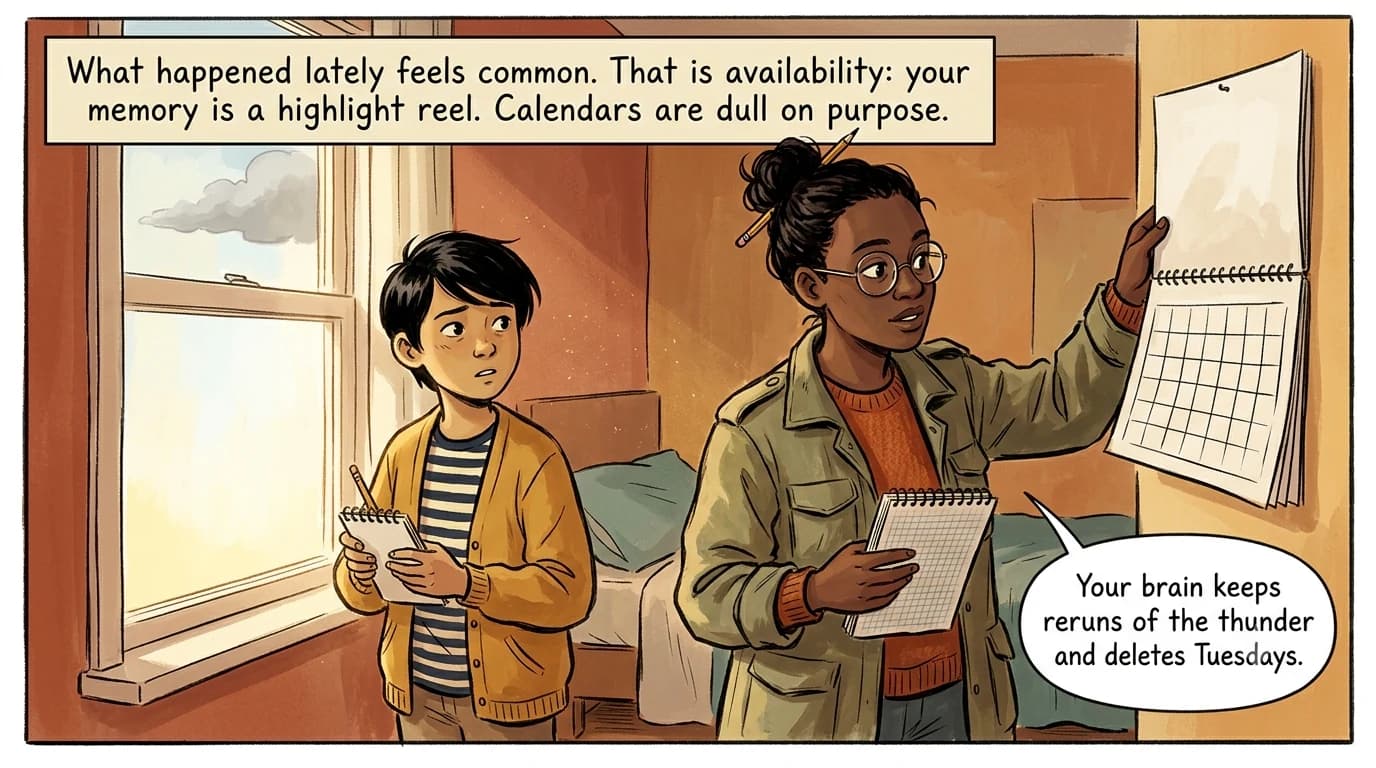
A kid startled by a recent thunderclap looks at a calendar full of ordinary quiet days held by a researcher.
What happened lately feels common. That is availability: your memory is a highlight reel. Calendars are dull on purpose.
Nia: Your brain keeps reruns of the thunder and deletes Tuesdays.
Panel 9
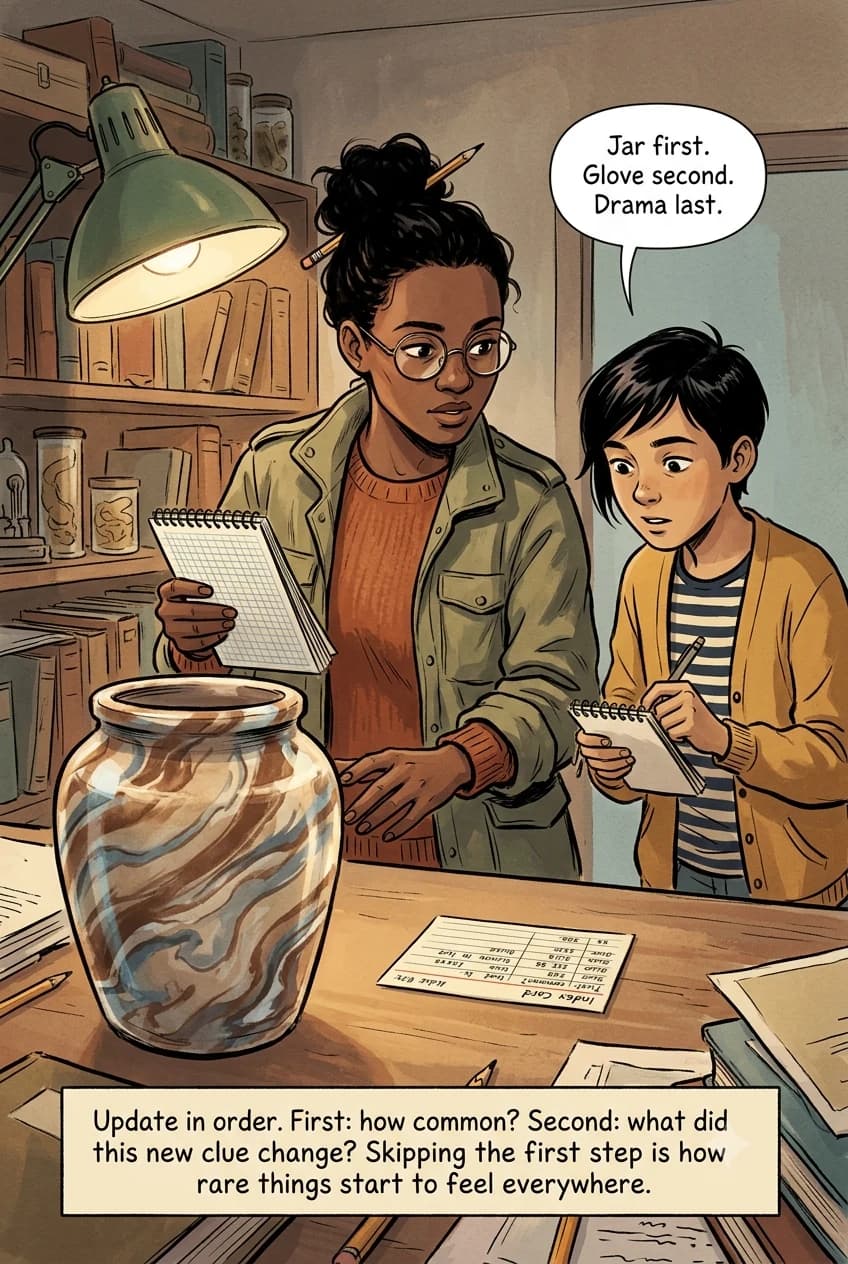
A researcher places a large jar of marbles in front of a small test card to show thinking in the right order.
Update in order. First: how common? Second: what did this new clue change? Skipping the first step is how rare things start to feel everywhere.
Jules: Jar first. Glove second. Drama last.
Panel 10
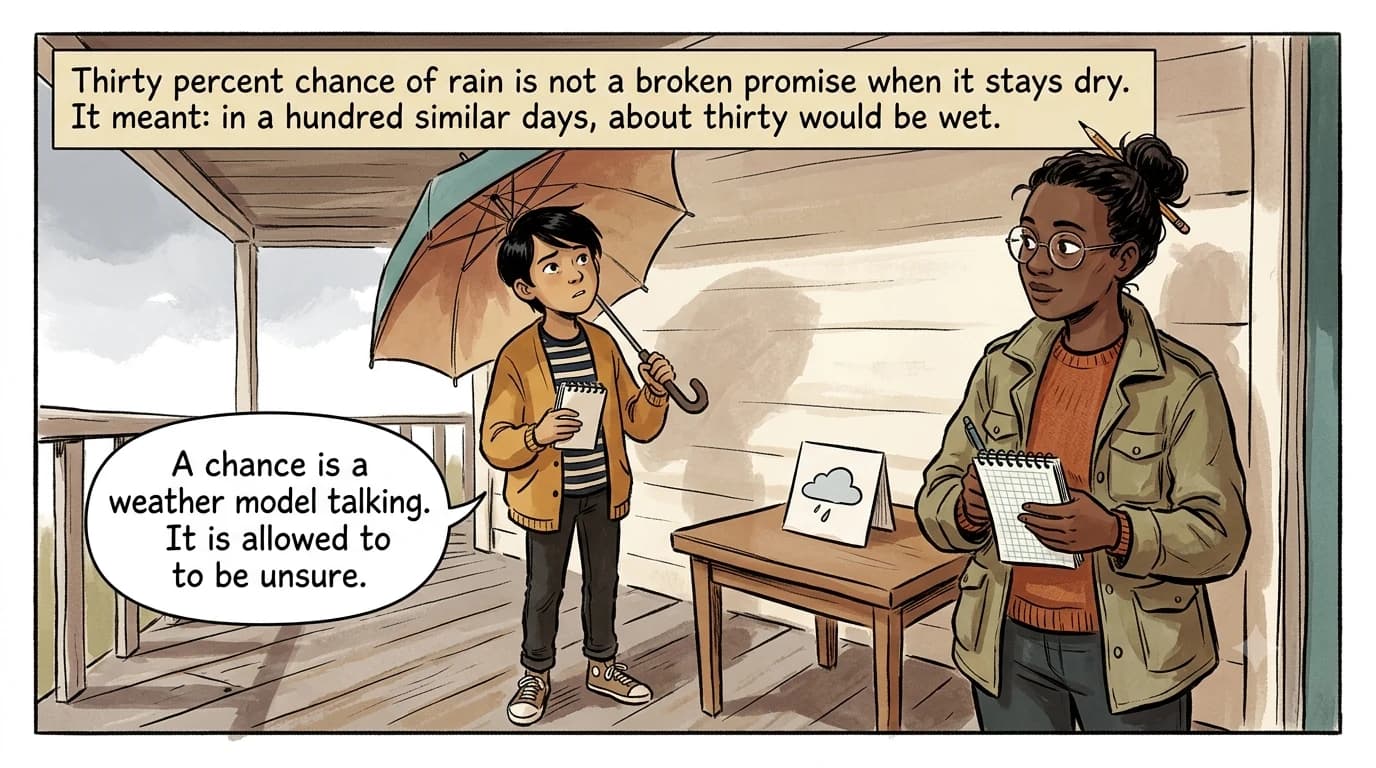
A kid holds an umbrella under a weather chart showing a thirty percent chance of rain, learning that chance is not a promise.
Thirty percent chance of rain is not a broken promise when it stays dry. It meant: in a hundred similar days, about thirty would be wet.
Nia: A chance is a weather model talking. It is allowed to be unsure.
Panel 11
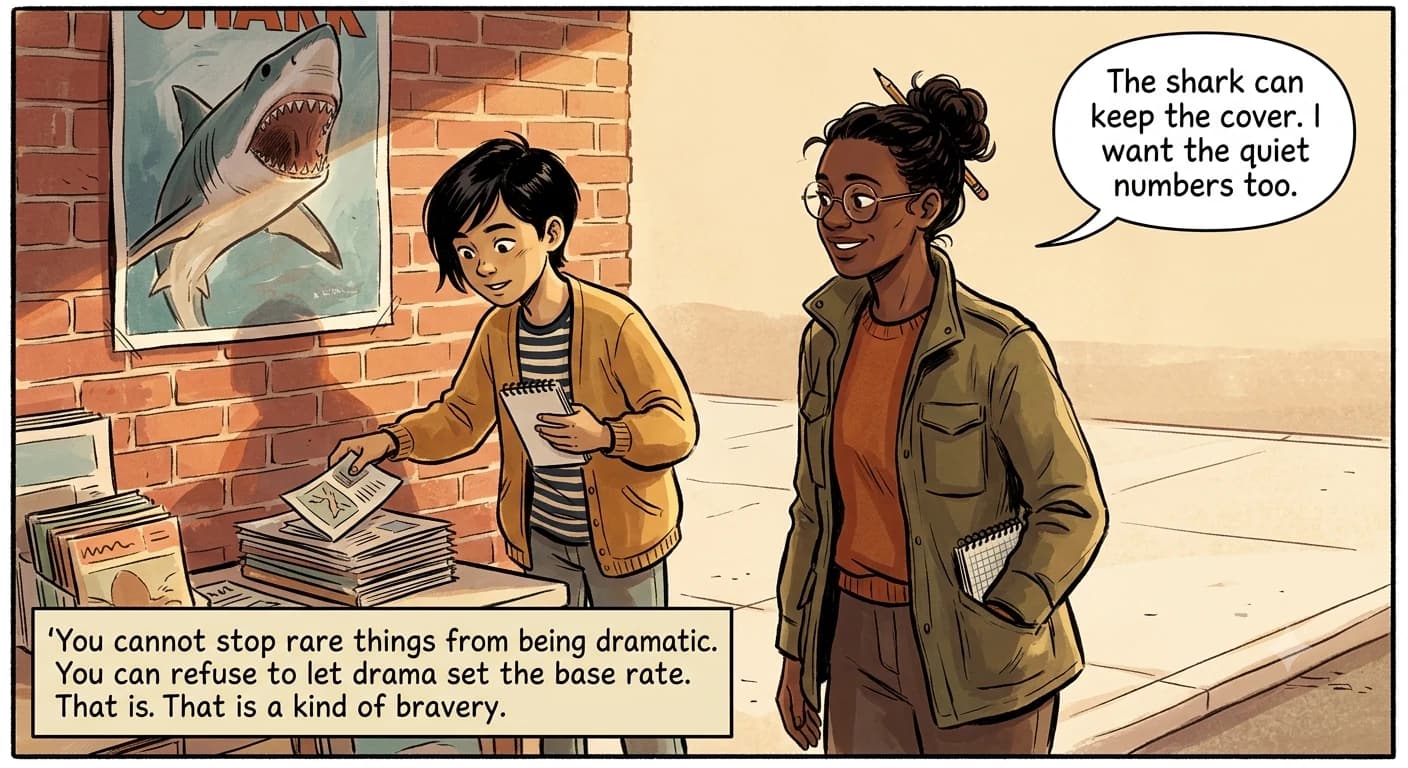
A kid walks past a dramatic shark poster and picks up a quiet safety pamphlet instead.
You cannot stop rare things from being dramatic. You can refuse to let drama set the base rate. That is a kind of bravery.
Jules: The shark can keep the cover. I want the quiet numbers too.
Panel 12
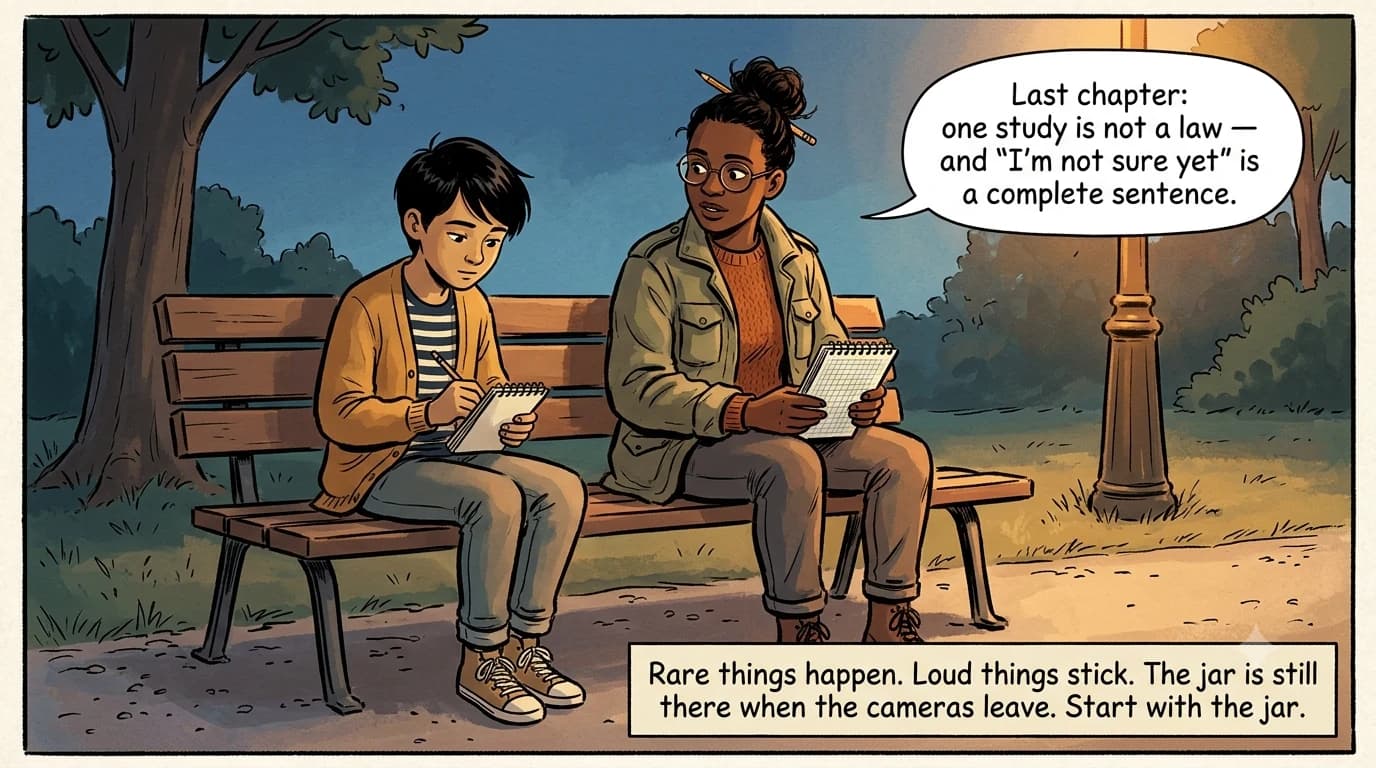
At dusk a kid writes 'jar first' in a notebook while a researcher hints that one study is not a law.
Rare things happen. Loud things stick. The jar is still there when the cameras leave. Start with the jar.
Nia: Last chapter: one study is not a law — and 'I'm not sure yet' is a complete sentence.