How Not to Be Fooled · Chapter 2: Who Did We Ask?
Cover
How Not to Be Fooled · Chapter 2
Who Did We Ask?
A sample is not a population — and missing people still count
Three friends, a pizza line, a wartime airplane, and a ladle of soup. Jules learns that the first question under any big number is: who did we actually count?
12 panels · ~6 min read
Panel 1
Panel 2
Panel 3
Panel 4
Panel 5
Panel 6
Panel 7
Panel 8
Panel 9
Panel 10
Panel 11
Panel 12
Read chapter text: Who Did We Ask?
Three friends, a pizza line, a wartime airplane, and a ladle of soup. Jules learns that the first question under any big number is: who did we actually count?
Panel 1
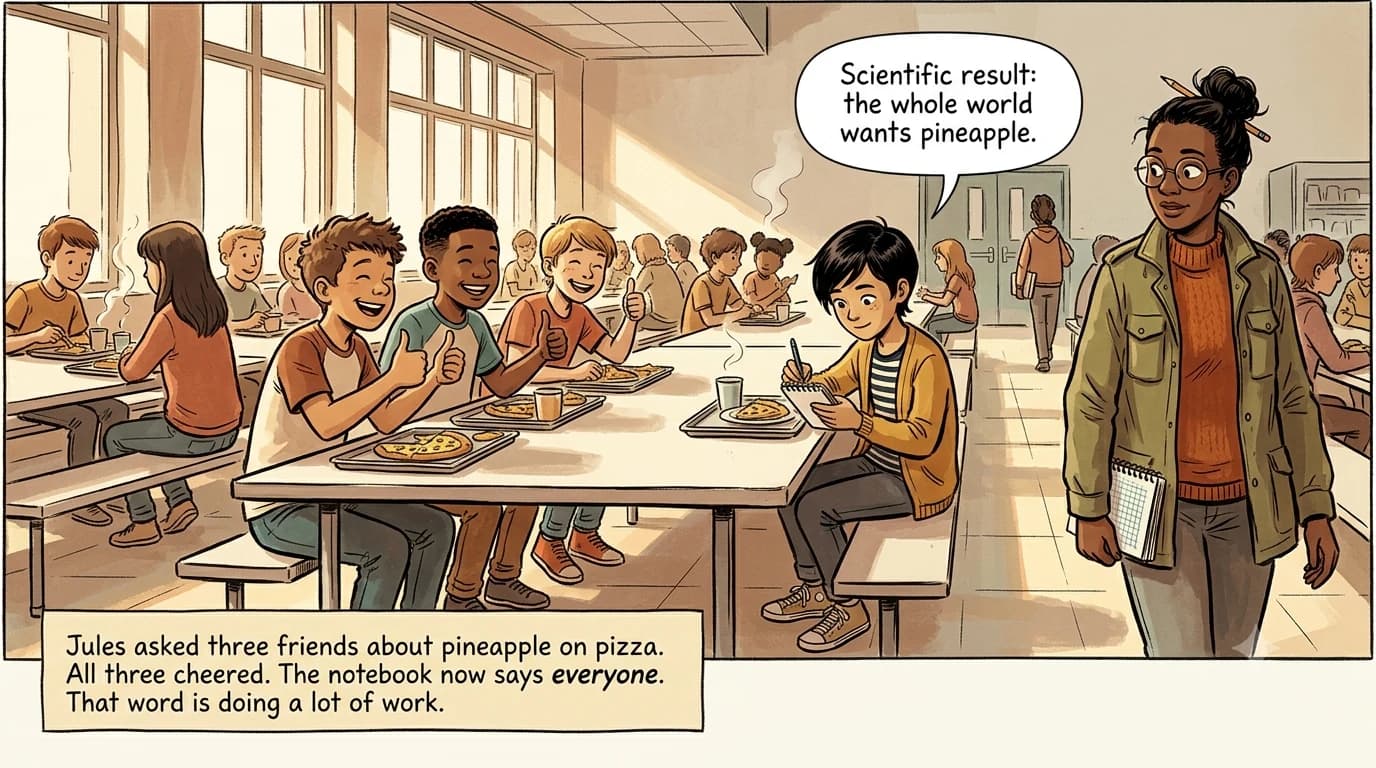
A kid at a lunch table polls three grinning friends about pineapple pizza and writes a sweeping conclusion in a notebook.
Jules asked three friends about pineapple on pizza. All three cheered. The notebook now says everyone. That word is doing a lot of work.
Jules: Scientific result: the whole world wants pineapple.
Panel 2
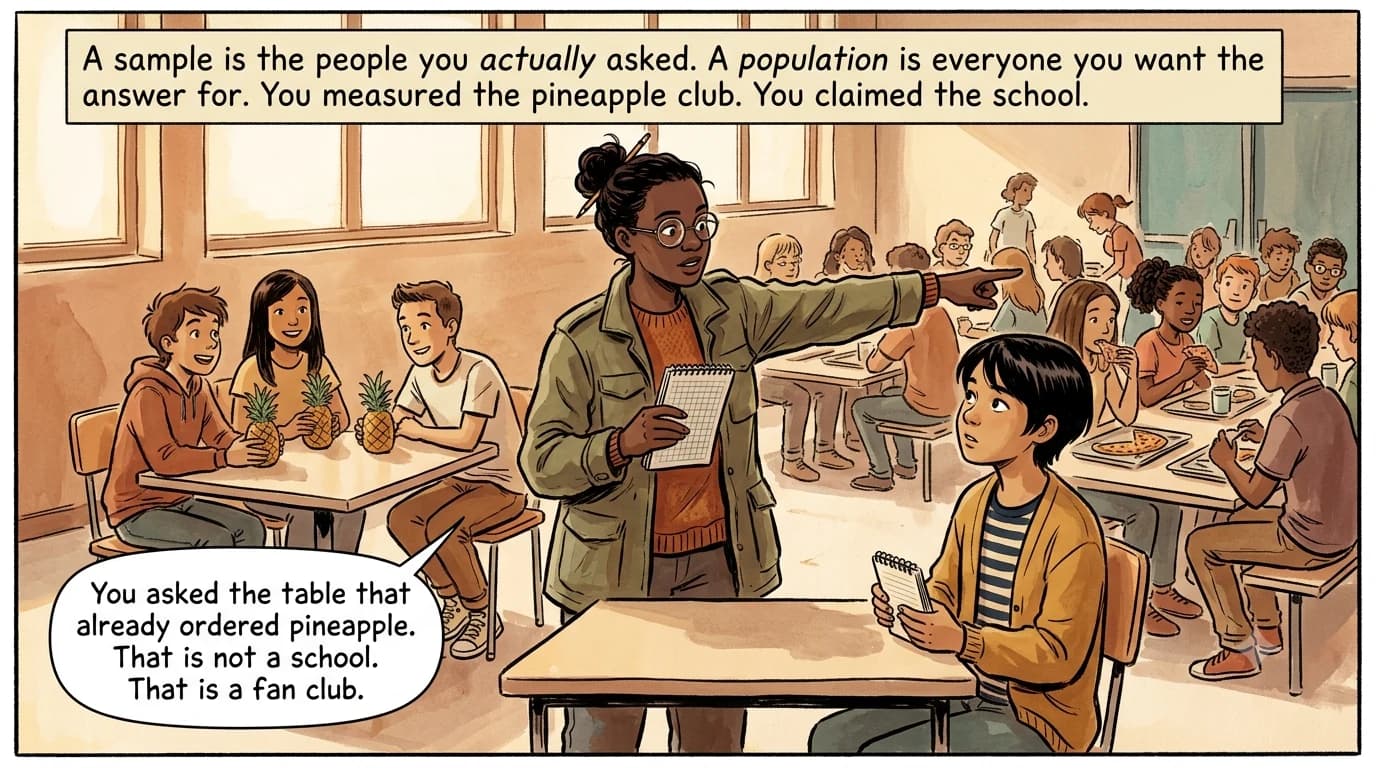
A researcher points from a small table of pineapple fans toward the rest of a crowded cafeteria the kid did not poll.
A sample is the people you actually asked. A population is everyone you want the answer for. You measured the pineapple club. You claimed the school.
Nia: You asked the table that already ordered pineapple. That is not a school. That is a fan club.
Panel 3
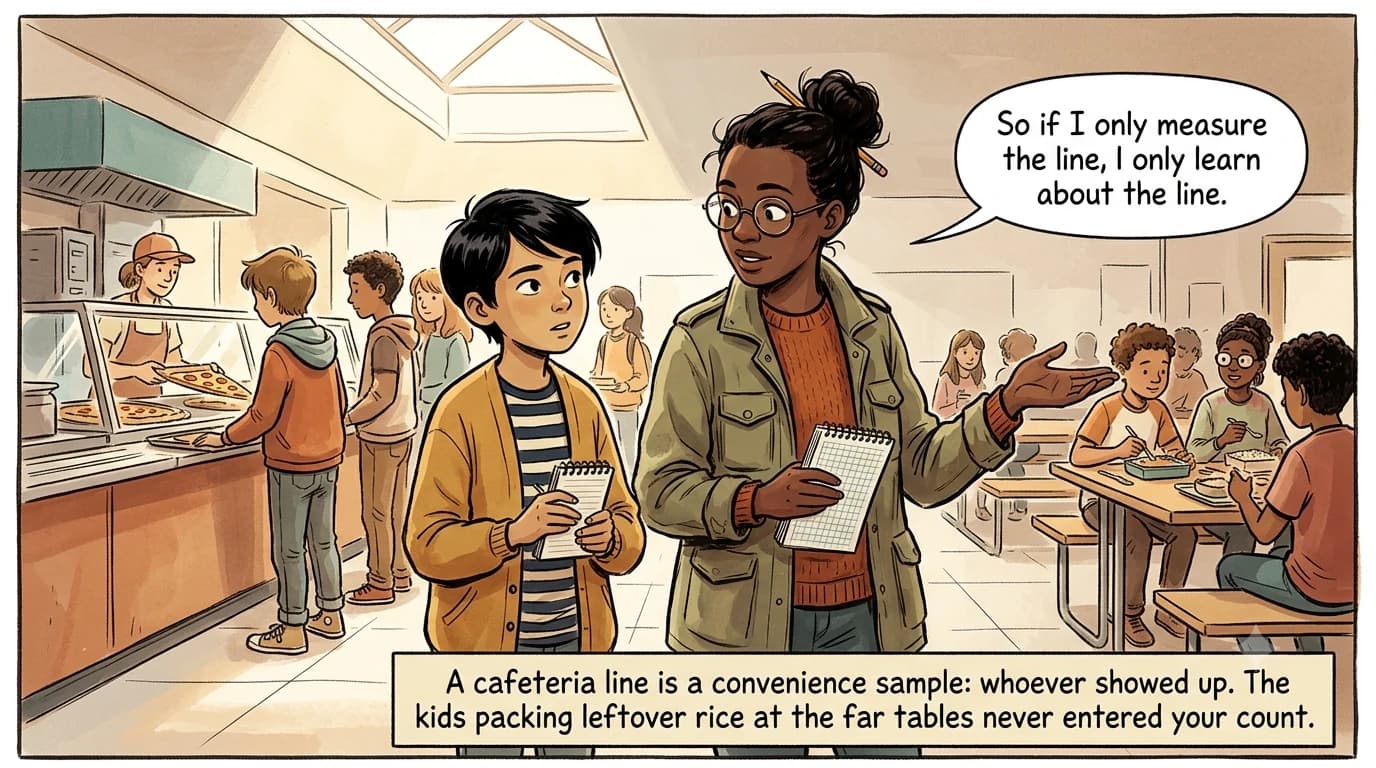
A kid counts students in a pizza line while other students eat packed lunches at far tables, outside the count.
A cafeteria line is a convenience sample: whoever showed up. The kids packing leftover rice at the far tables never entered your count.
Jules: So if I only measure the line, I only learn about the line.
Panel 4
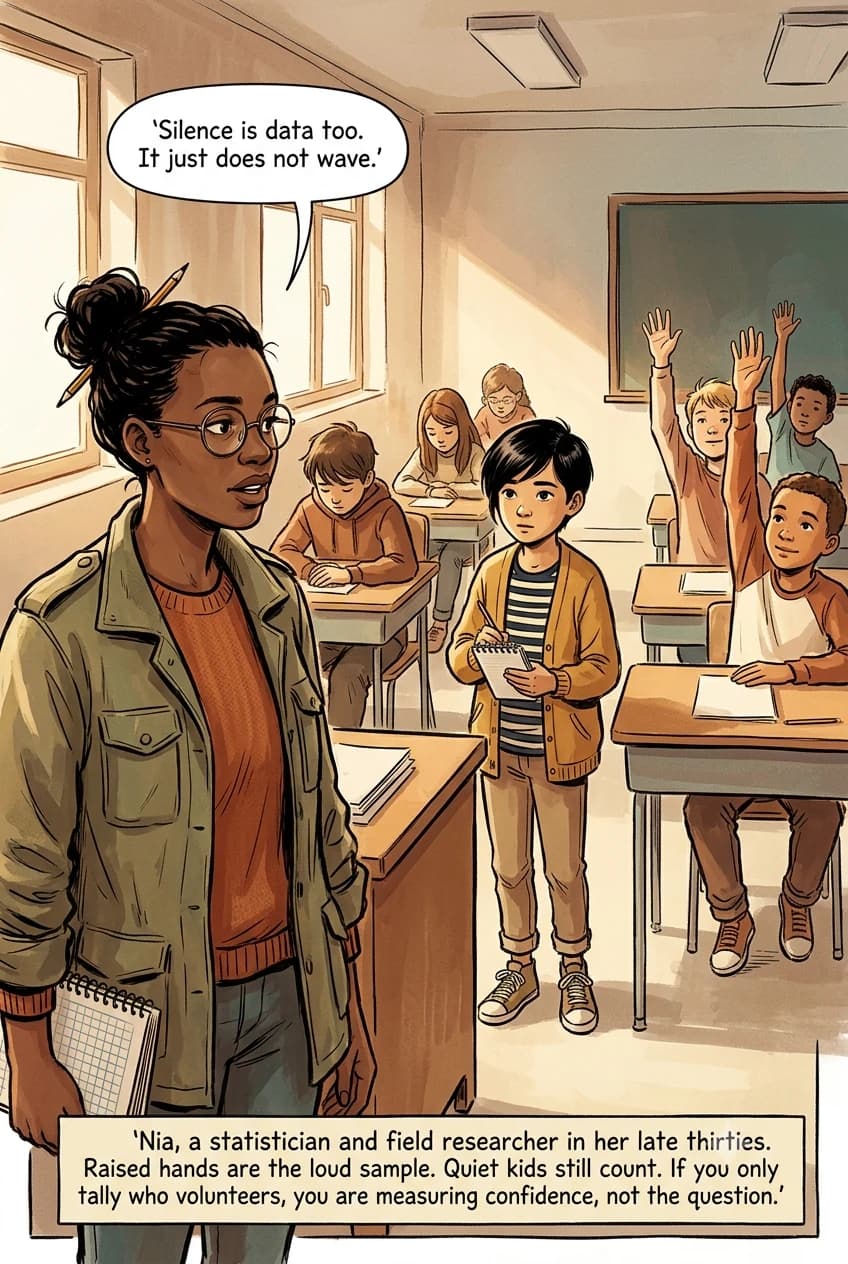
A few confident students raise hands in class while others sit still, as a researcher warns that silence is still data.
Raised hands are the loud sample. Quiet kids still count. If you only tally who volunteers, you are measuring confidence, not the question.
Nia: Silence is data too. It just does not wave.
Panel 5
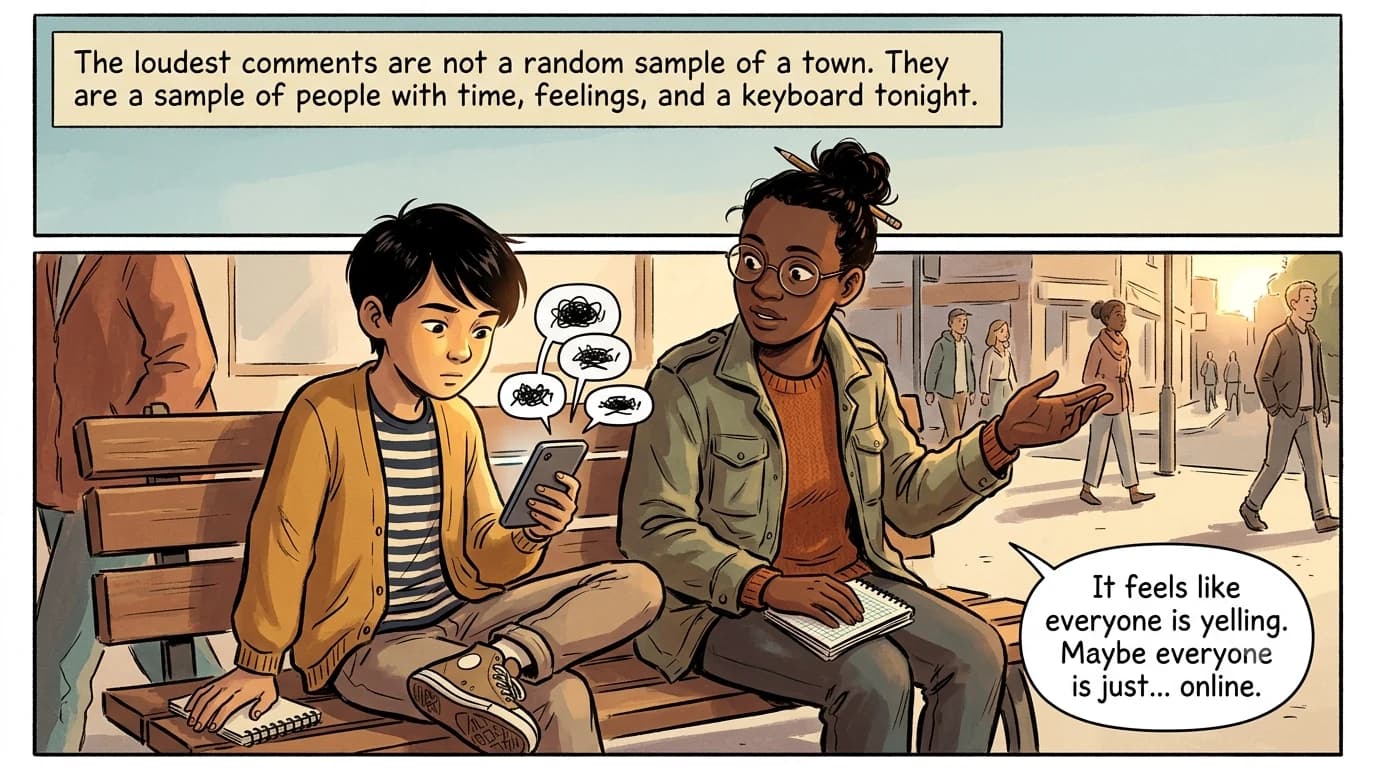
A kid stares at a phone full of angry comments while a researcher gestures at a quiet street of people who posted nothing.
The loudest comments are not a random sample of a town. They are a sample of people with time, feelings, and a keyboard tonight.
Jules: It feels like everyone is yelling. Maybe everyone is just... online.
Panel 6
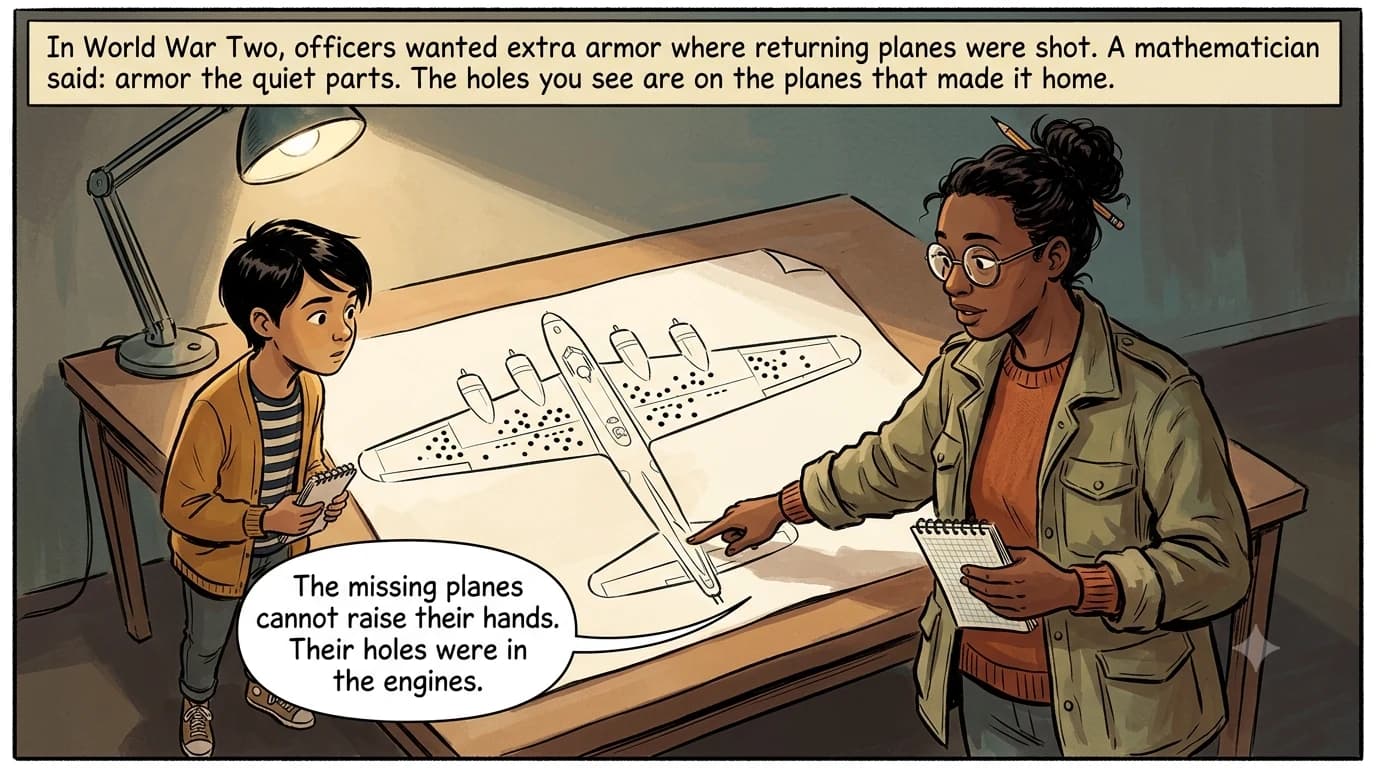
A researcher shows a diagram of a returning airplane with bullet holes on the wings, explaining that missing planes tell a different story.
In World War Two, officers wanted extra armor where returning planes were shot. A mathematician said: armor the quiet parts. The holes you see are on the planes that made it home.
Nia: The missing planes cannot raise their hands. Their holes were in the engines.
Panel 7
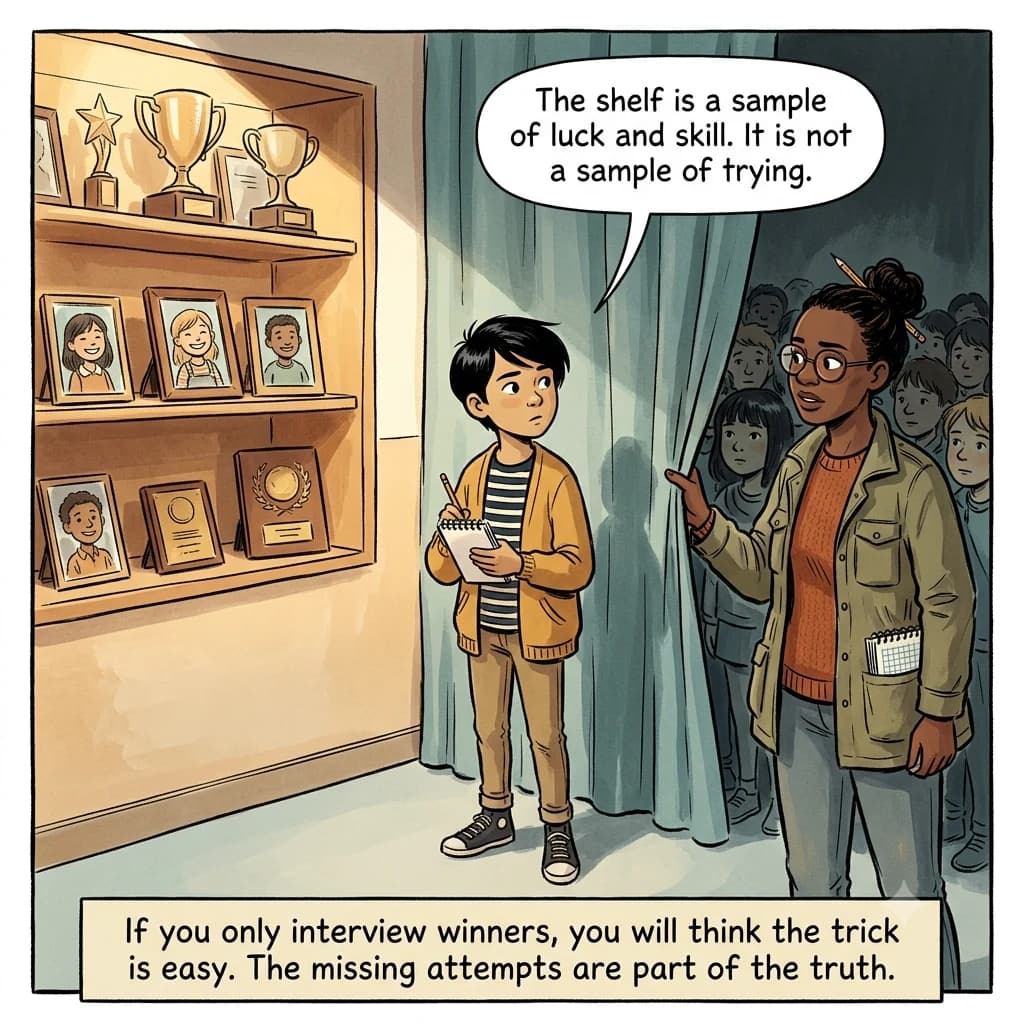
A trophy shelf of smiling winners stands in the light while many other kids who tried wait unlit behind a curtain.
If you only interview winners, you will think the trick is easy. The missing attempts are part of the truth.
Jules: The shelf is a sample of luck and skill. It is not a sample of trying.
Panel 8
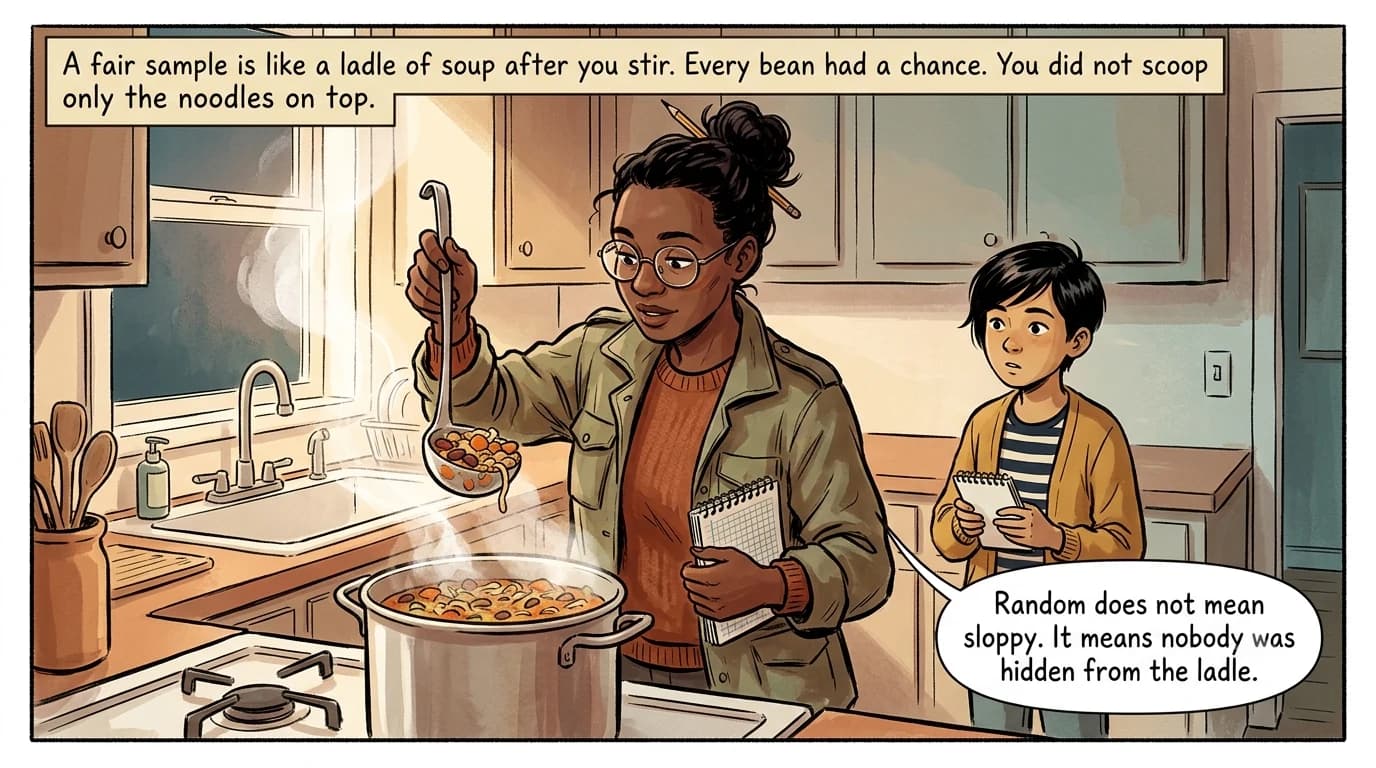
A researcher stirs a pot of mixed soup and lifts a ladle that holds a mix of vegetables, showing a fair sample.
A fair sample is like a ladle of soup after you stir. Every bean had a chance. You did not scoop only the noodles on top.
Nia: Random does not mean sloppy. It means nobody was hidden from the ladle.
Panel 9
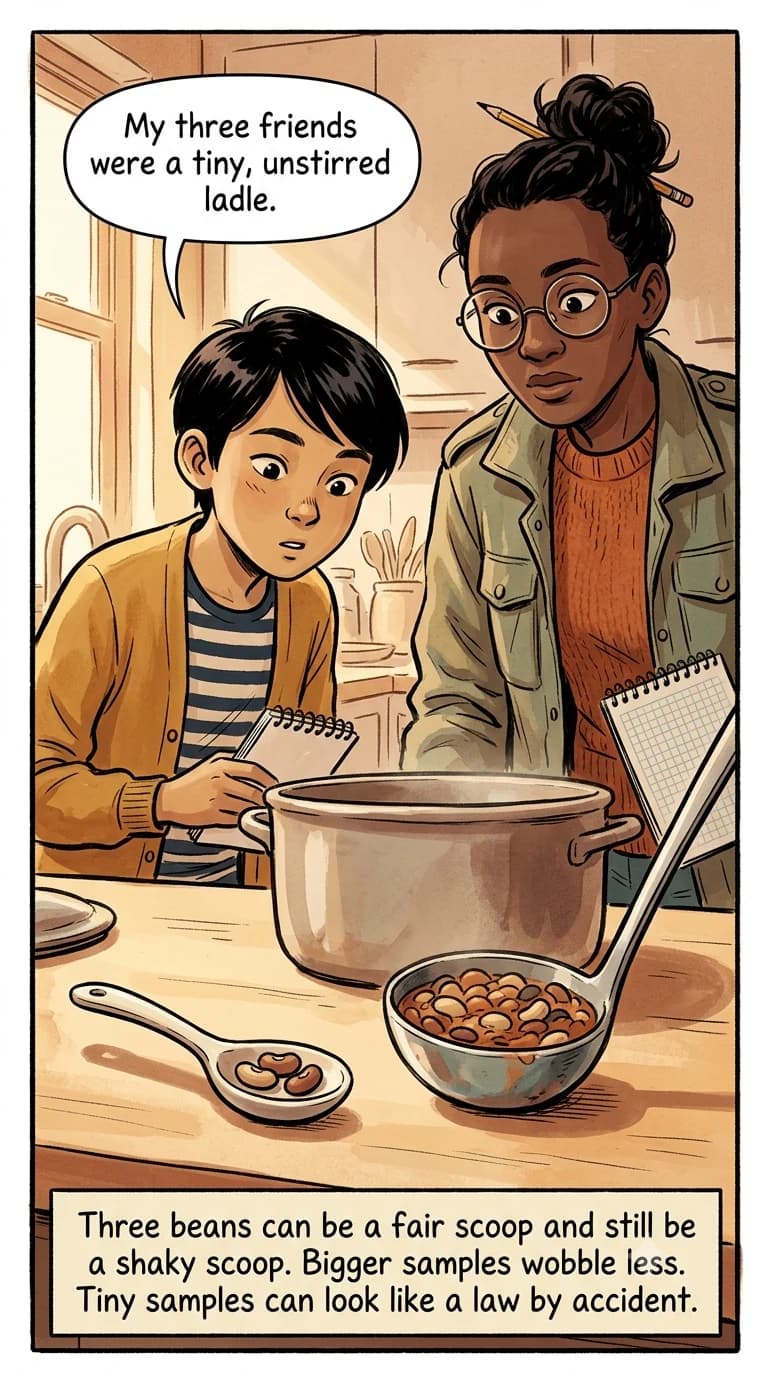
A tiny spoon holding three beans sits beside a large mixed ladle from the same soup pot.
Three beans can be a fair scoop and still be a shaky scoop. Bigger samples wobble less. Tiny samples can look like a law by accident.
Jules: My three friends were a tiny, unstirred ladle.
Panel 10
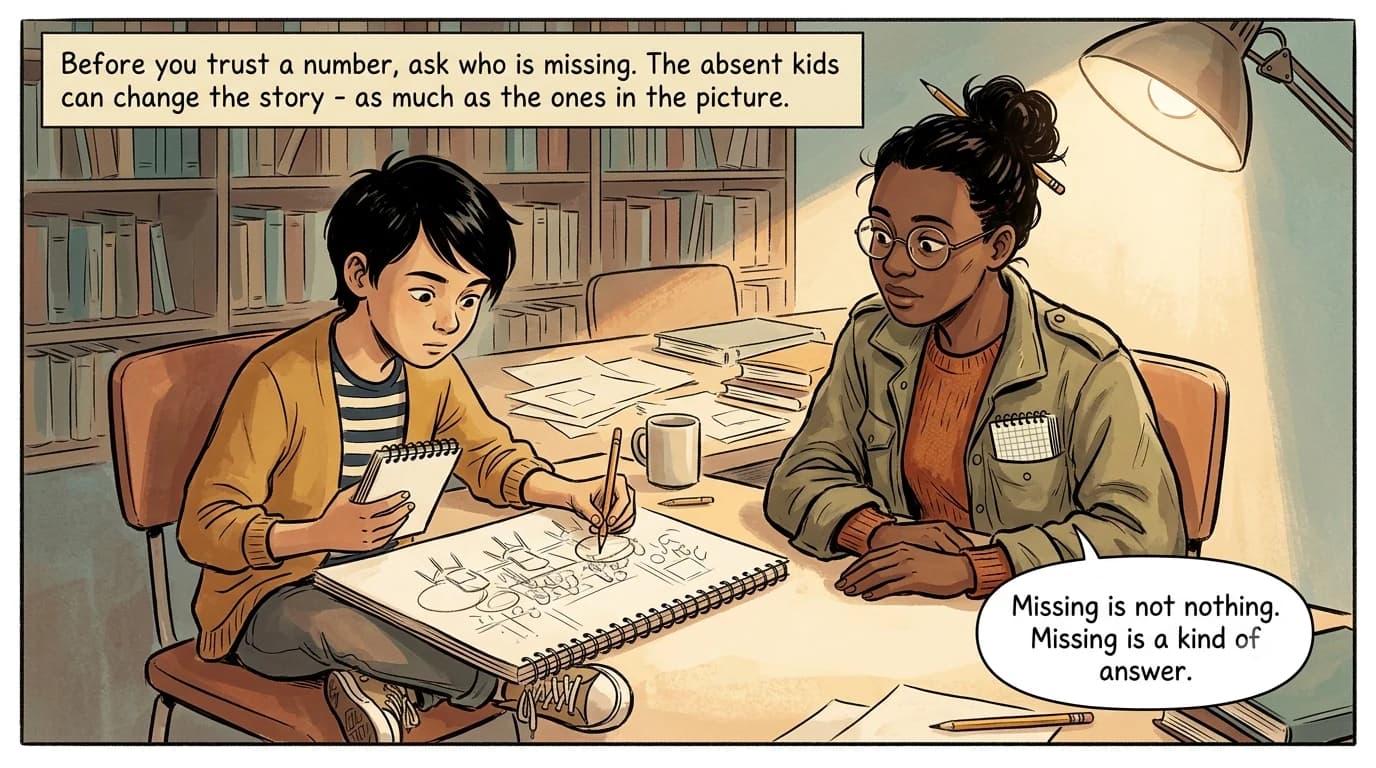
A kid sketches a cafeteria group photo and marks empty chairs for students who were not asked.
Before you trust a number, ask who is missing. The absent kids can change the story as much as the ones in the picture.
Nia: Missing is not nothing. Missing is a kind of answer.
Panel 11
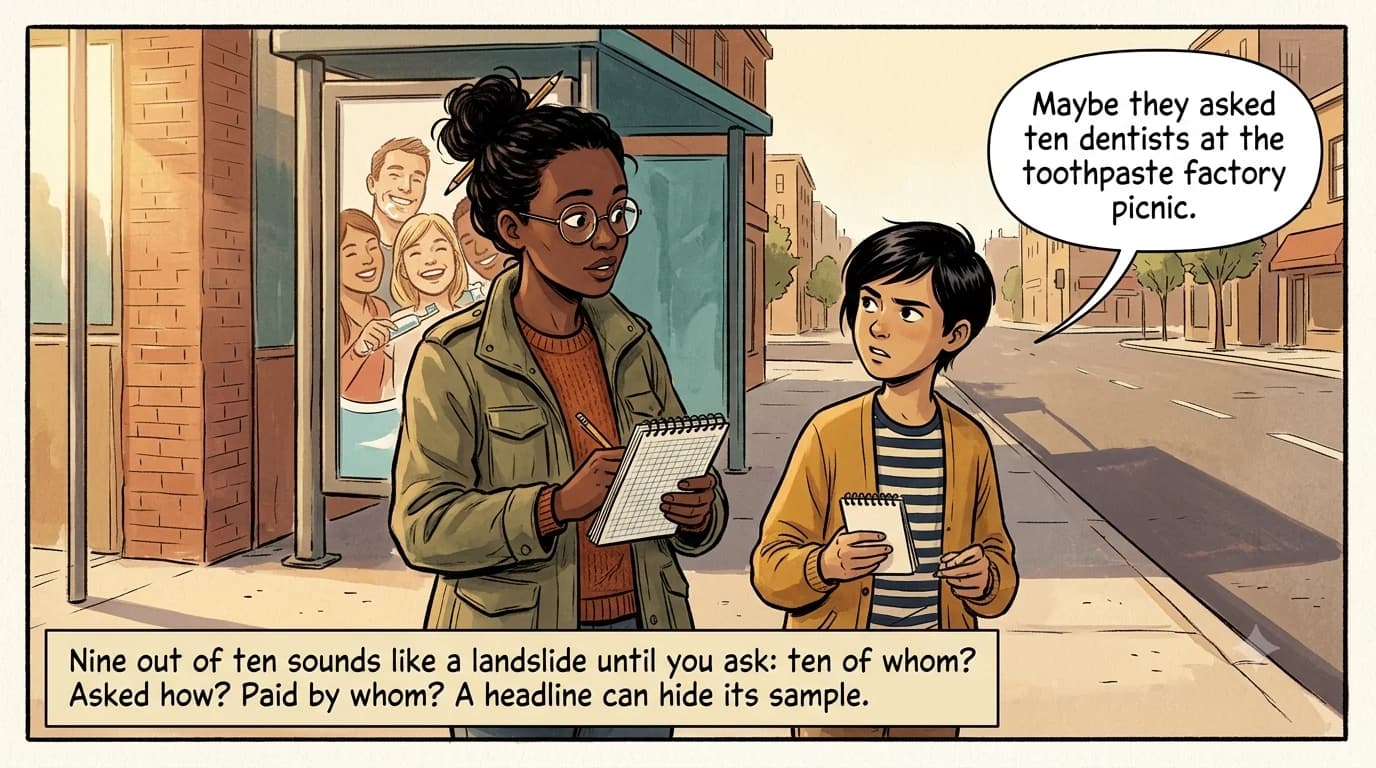
A kid and a researcher look at a bus-shelter toothpaste ad claiming most dentists agree, questioning who was asked.
Nine out of ten sounds like a landslide until you ask: ten of whom? Asked how? Paid by whom? A headline can hide its sample.
Jules: Maybe they asked ten dentists at the toothpaste factory picnic.
Panel 12
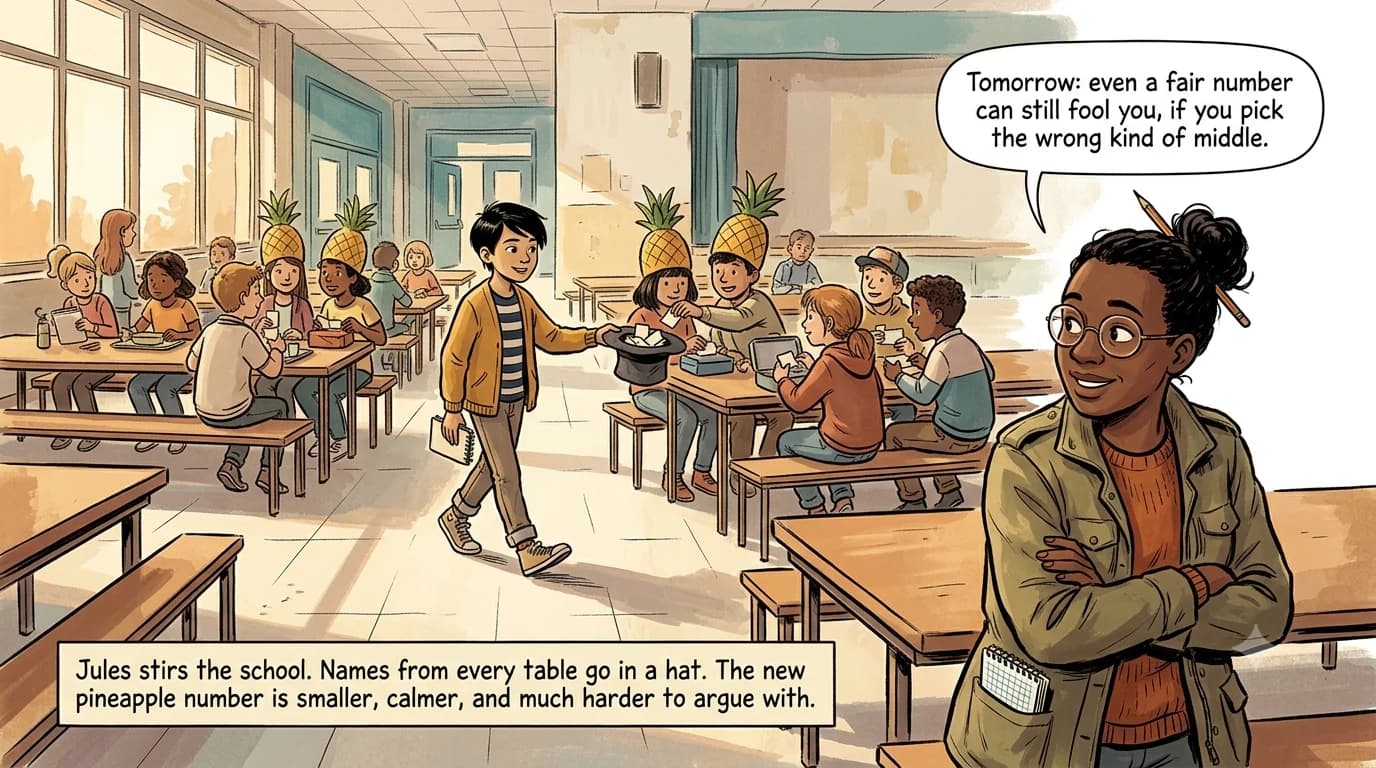
A kid walks a cafeteria drawing name slips from every table to redo a pizza poll more fairly.
Jules stirs the school. Names from every table go in a hat. The new pineapple number is smaller, calmer, and much harder to argue with.
Nia: Tomorrow: even a fair number can still fool you, if you pick the wrong kind of middle.