How Not to Be Fooled · Chapter 3: The Average That Lied
Cover
How Not to Be Fooled · Chapter 3
The Average That Lied
Mean, median, and the number that describes nobody
A thousand-dollar stack, a ghost shoe, and two class photos with the same average height. Jules learns that 'typical' is a family of words — and headlines rarely show ID.
12 panels · ~6 min read
Panel 1
Panel 2
Panel 3
Panel 4
Panel 5
Panel 6
Panel 7
Panel 8
Panel 9
Panel 10
Panel 11
Panel 12
Read chapter text: The Average That Lied
A thousand-dollar stack, a ghost shoe, and two class photos with the same average height. Jules learns that 'typical' is a family of words — and headlines rarely show ID.
Panel 1
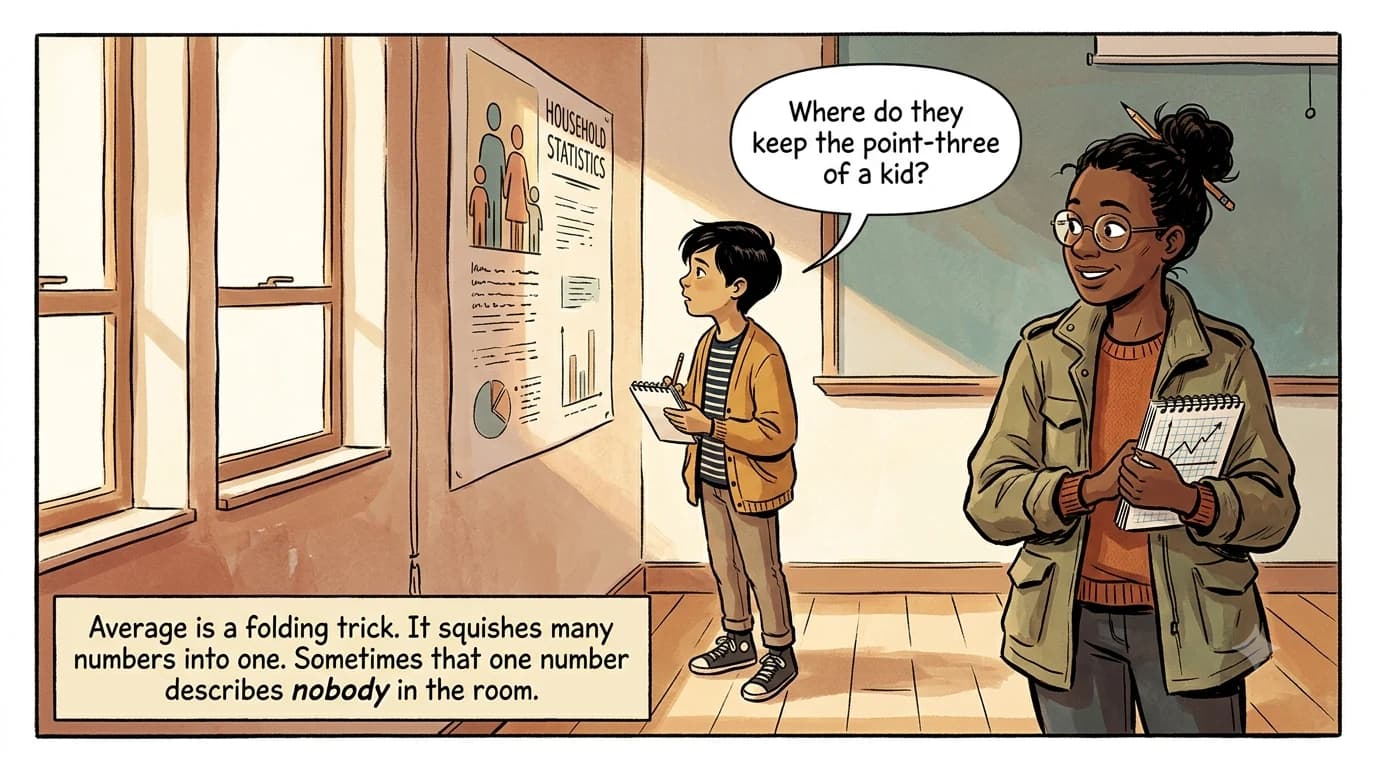
A kid stares at a classroom poster about average family size, puzzled by a number that does not match any real child.
Average is a folding trick. It squishes many numbers into one. Sometimes that one number describes nobody in the room.
Jules: Where do they keep the point-three of a kid?
Panel 2
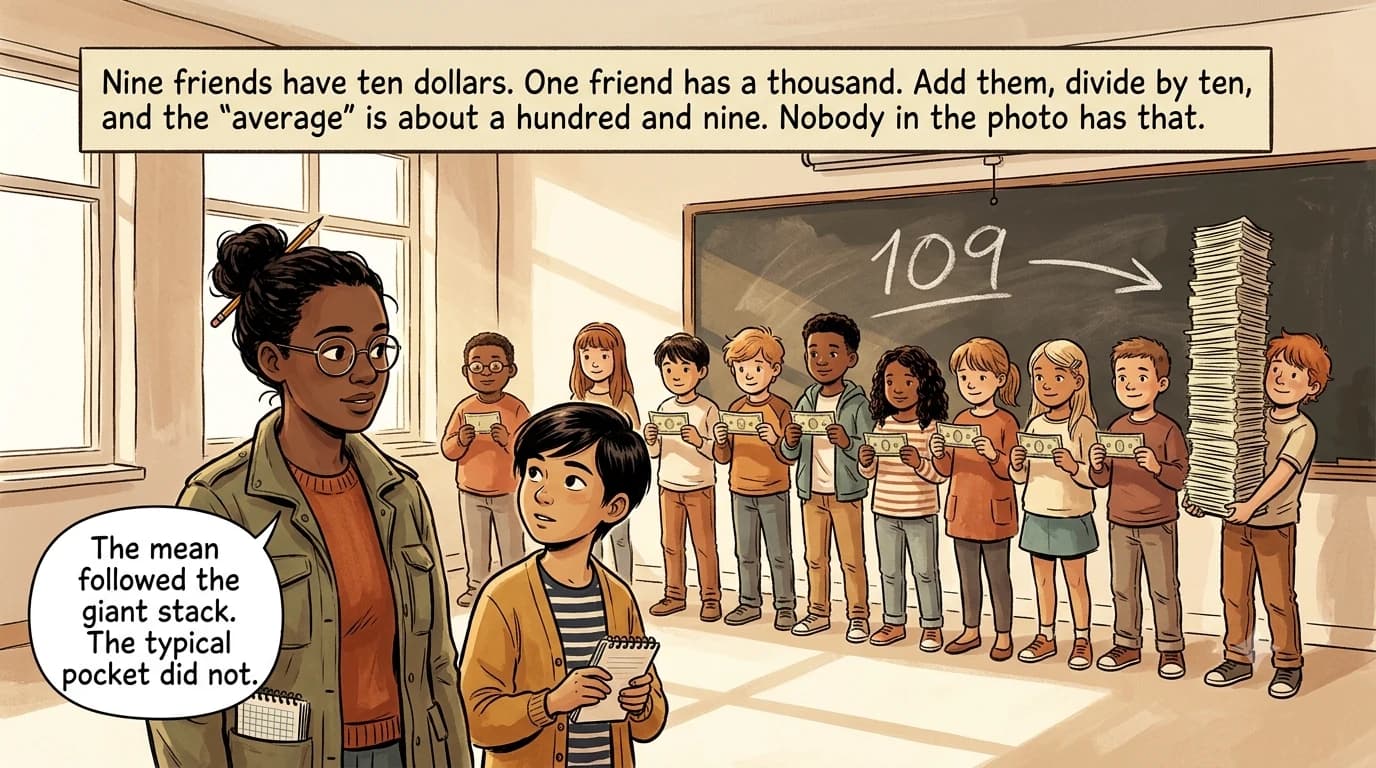
Nine kids hold small bills while one holds a huge stack, pulling a chalkboard average far above what most pockets hold.
Nine friends have ten dollars. One friend has a thousand. Add them, divide by ten, and the 'average' is about a hundred and nine. Nobody in the photo has that.
Nia: The mean followed the giant stack. The typical pocket did not.
Panel 3
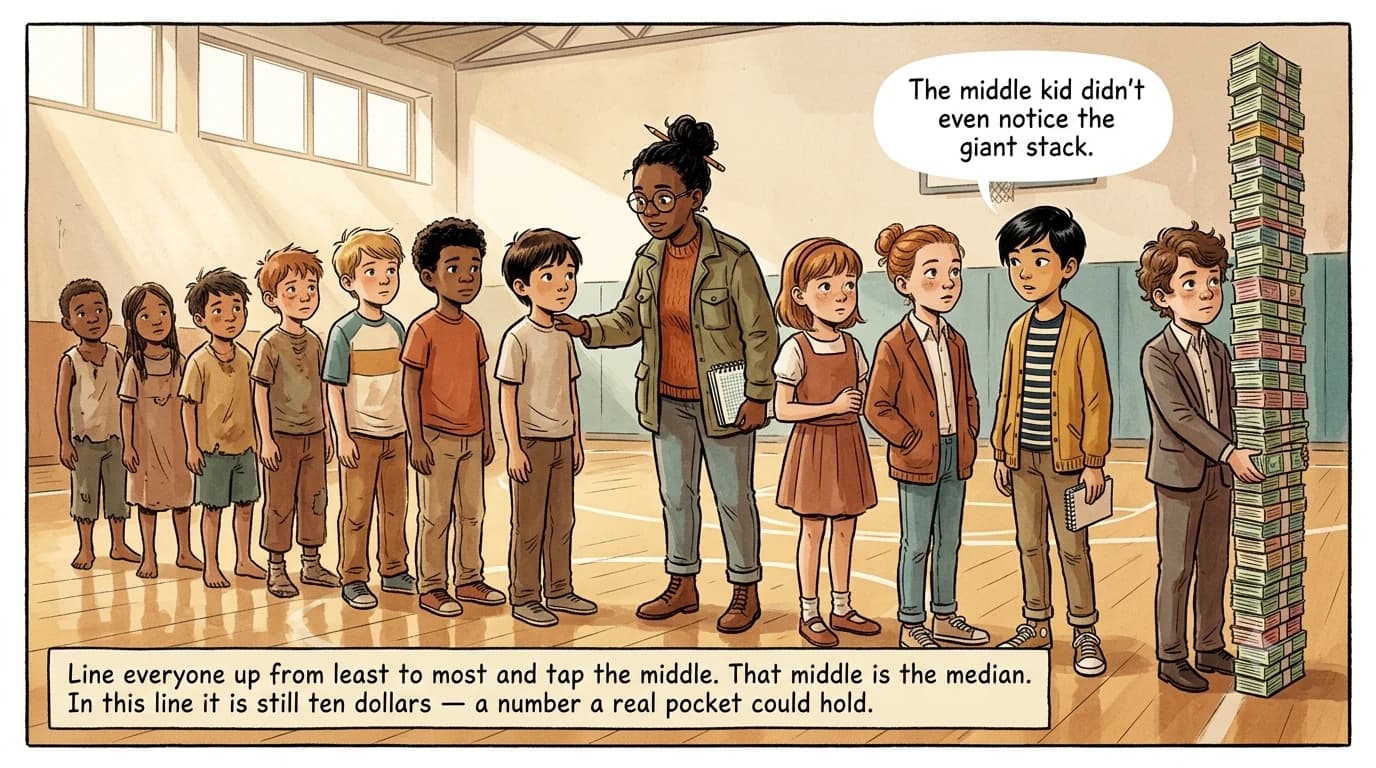
Ten kids line up from least money to most while a researcher taps the middle child as the median.
Line everyone up from least to most and tap the middle. That middle is the median. In this line it is still ten dollars — a number a real pocket could hold.
Jules: The middle kid didn't even notice the giant stack.
Panel 4
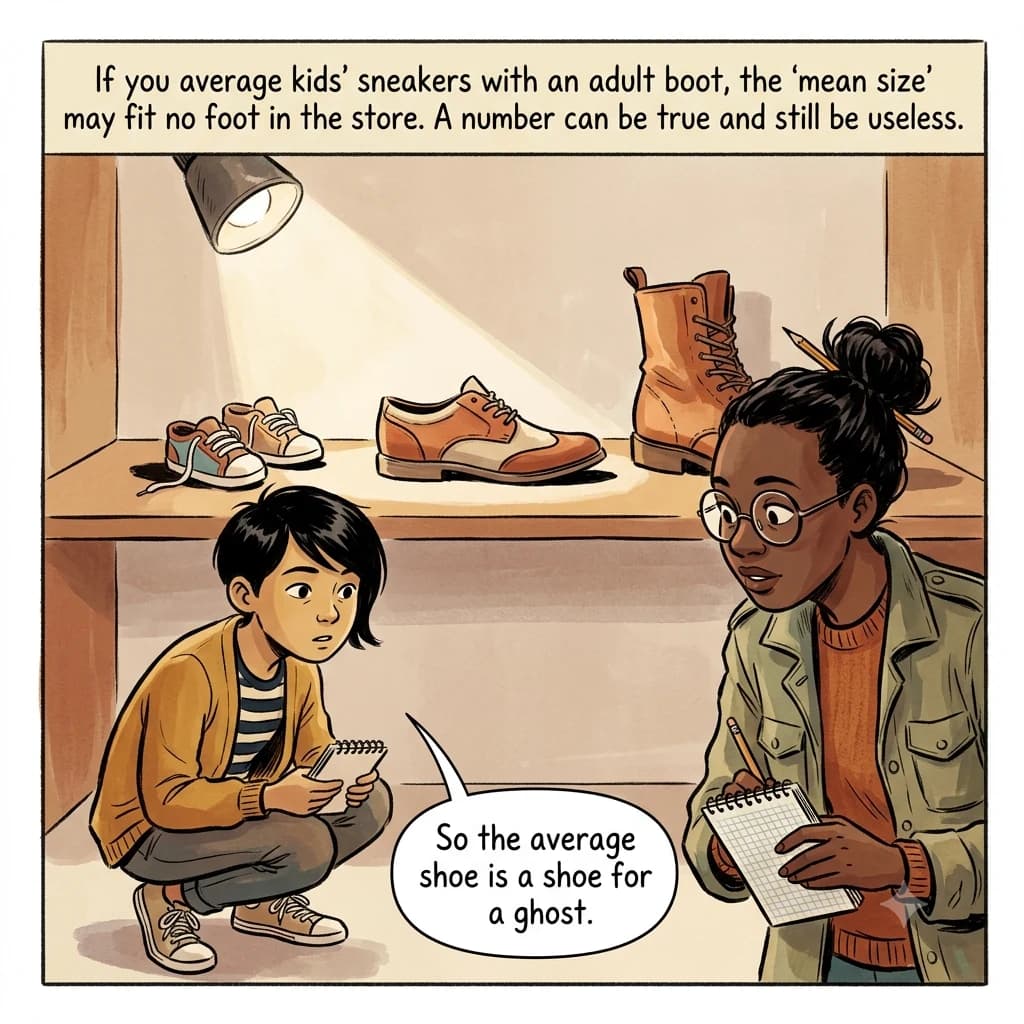
A labeled average-size shoe sits between tiny kids' sneakers and a huge adult boot, fitting neither.
If you average kids' sneakers with an adult boot, the 'mean size' may fit no foot in the store. A number can be true and still be useless.
Jules: So the average shoe is a shoe for a ghost.
Panel 5
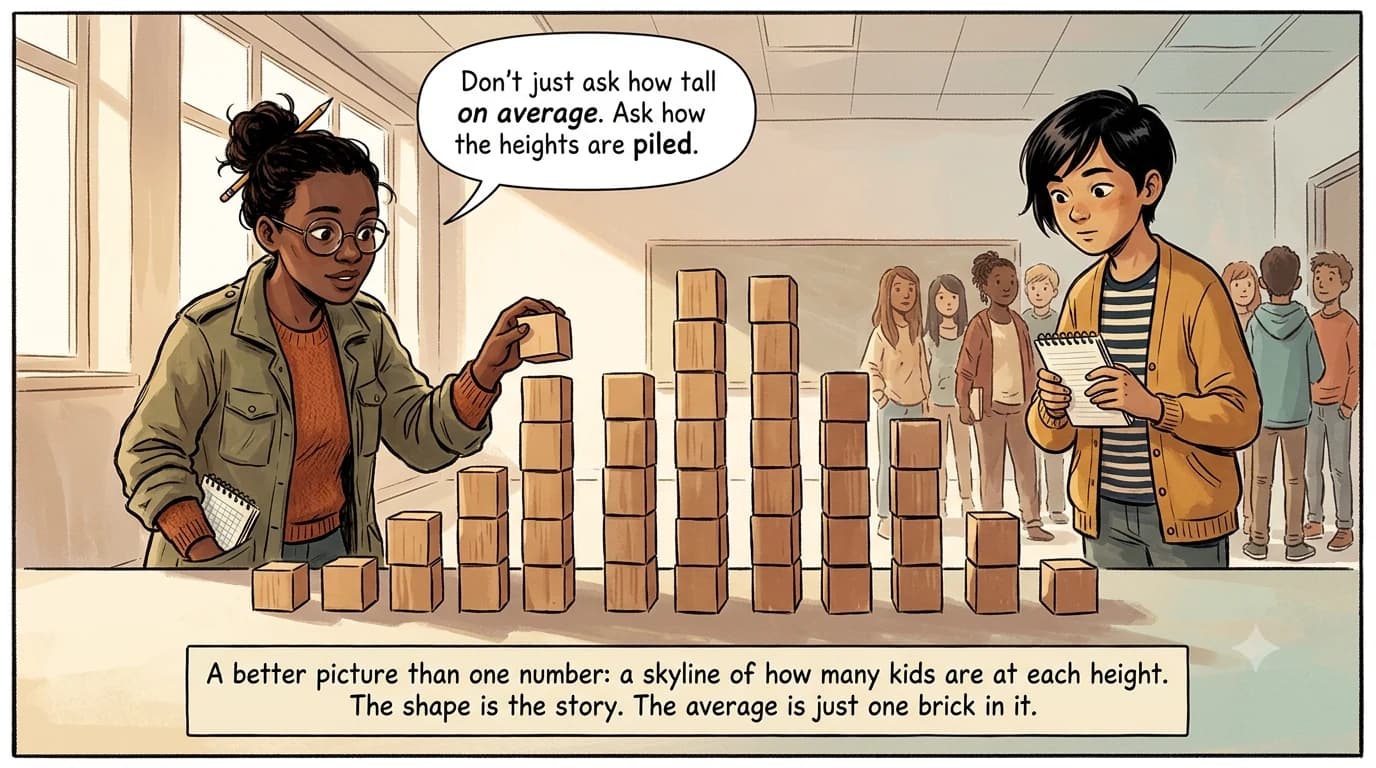
A researcher and a kid build a wooden-block skyline showing how many students fall at each height.
A better picture than one number: a skyline of how many kids are at each height. The shape is the story. The average is just one brick in it.
Nia: Don't just ask how tall on average. Ask how the heights are piled.
Panel 6
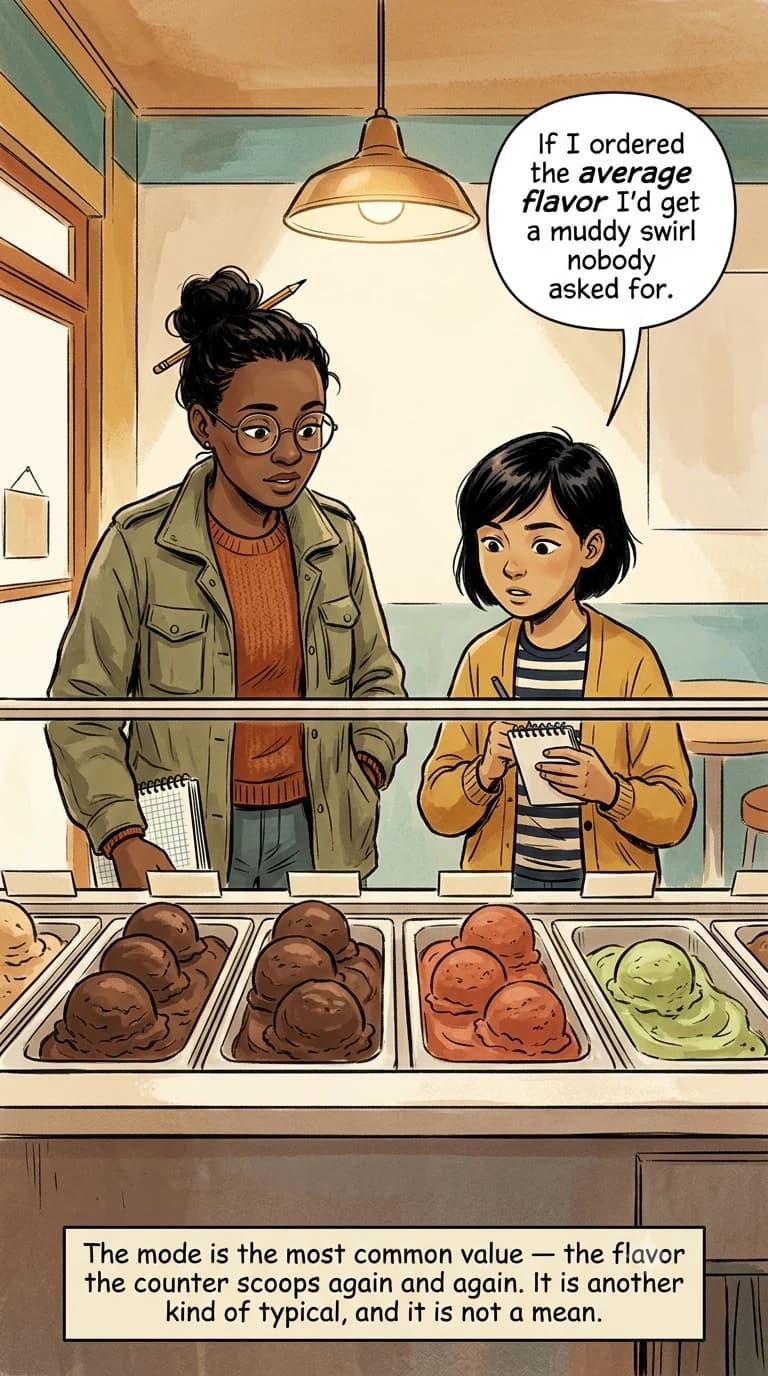
An ice-cream counter shows many chocolate scoops, a few strawberry, and one pistachio, illustrating the most common flavor.
The mode is the most common value — the flavor the counter scoops again and again. It is another kind of typical, and it is not a mean.
Jules: If I ordered the average flavor I'd get a muddy swirl nobody asked for.
Panel 7
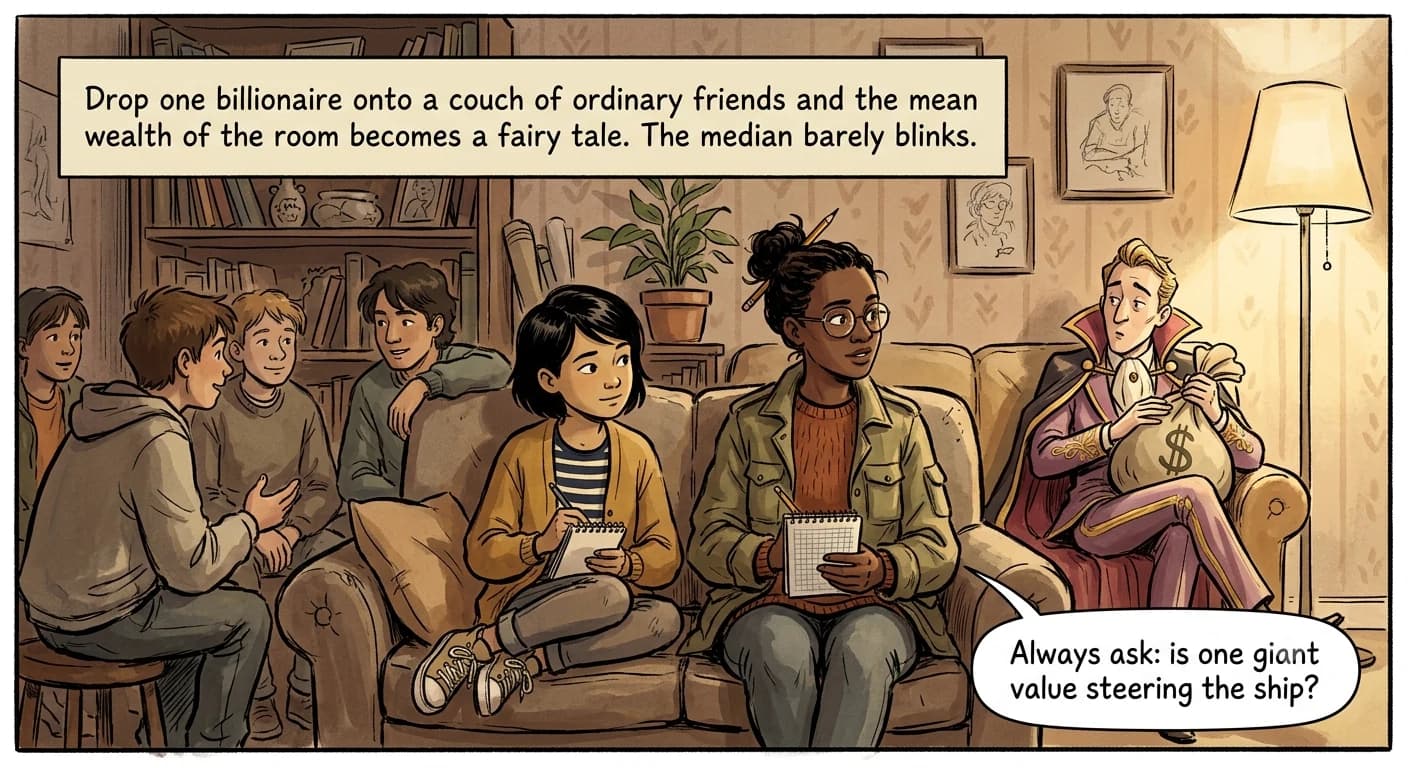
Ordinary friends sit on a couch while one flashy guest with a huge moneybag warps the idea of the room's average wealth.
Drop one billionaire onto a couch of ordinary friends and the mean wealth of the room becomes a fairy tale. The median barely blinks.
Nia: Always ask: is one giant value steering the ship?
Panel 8
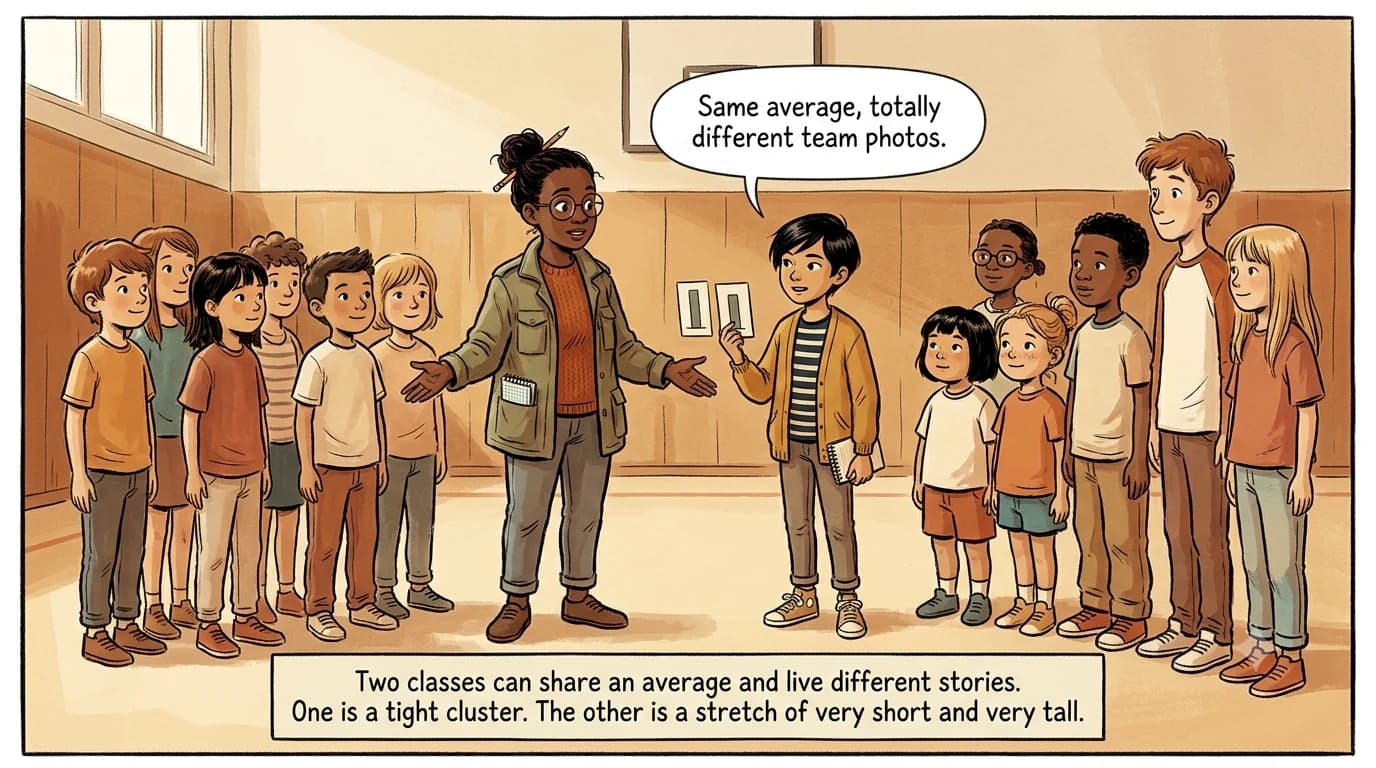
Two class photos share the same average height: one group is evenly sized, the other mixes very short and very tall kids.
Two classes can share an average and live different stories. One is a tight cluster. The other is a stretch of very short and very tall.
Jules: Same average, totally different team photos.
Panel 9
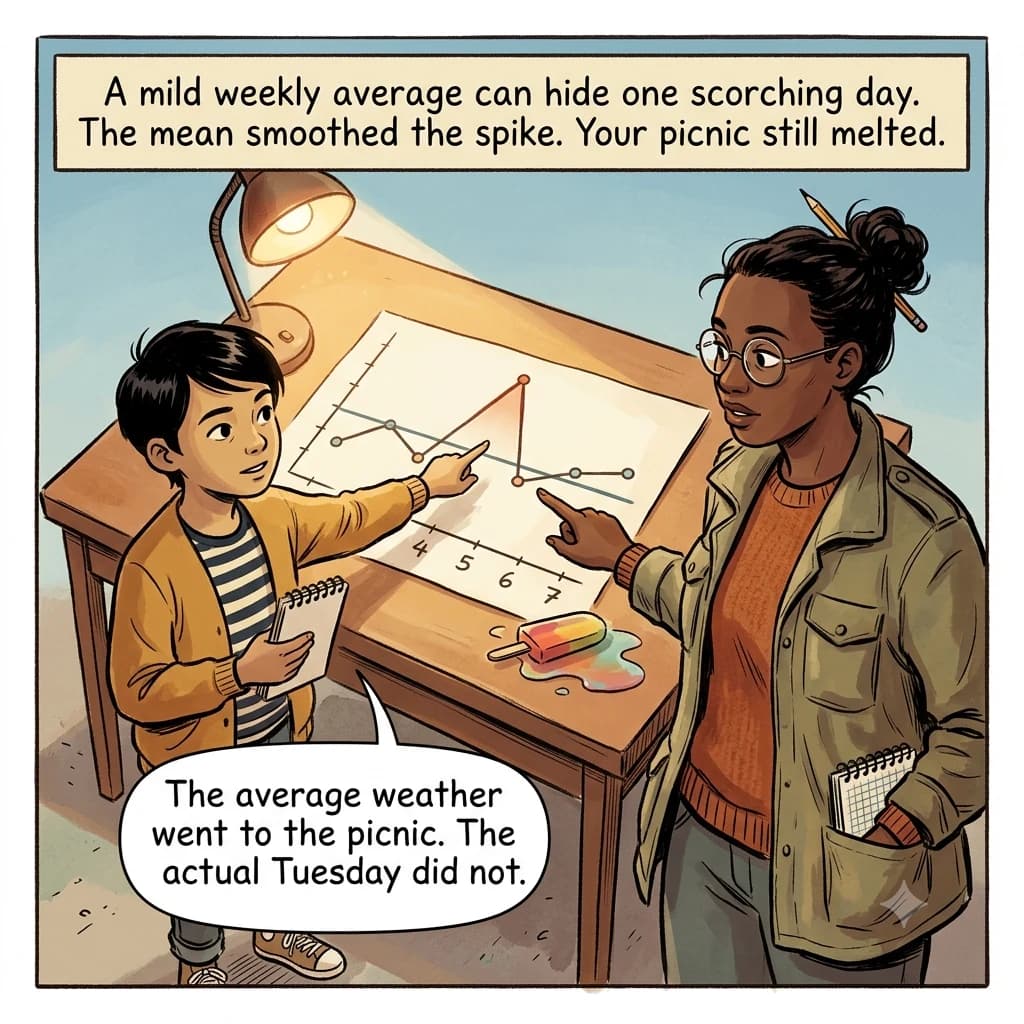
A simple weekly temperature chart looks mild overall but shows one extremely hot day in the middle.
A mild weekly average can hide one scorching day. The mean smoothed the spike. Your picnic still melted.
Jules: The average weather went to the picnic. The actual Tuesday did not.
Panel 10
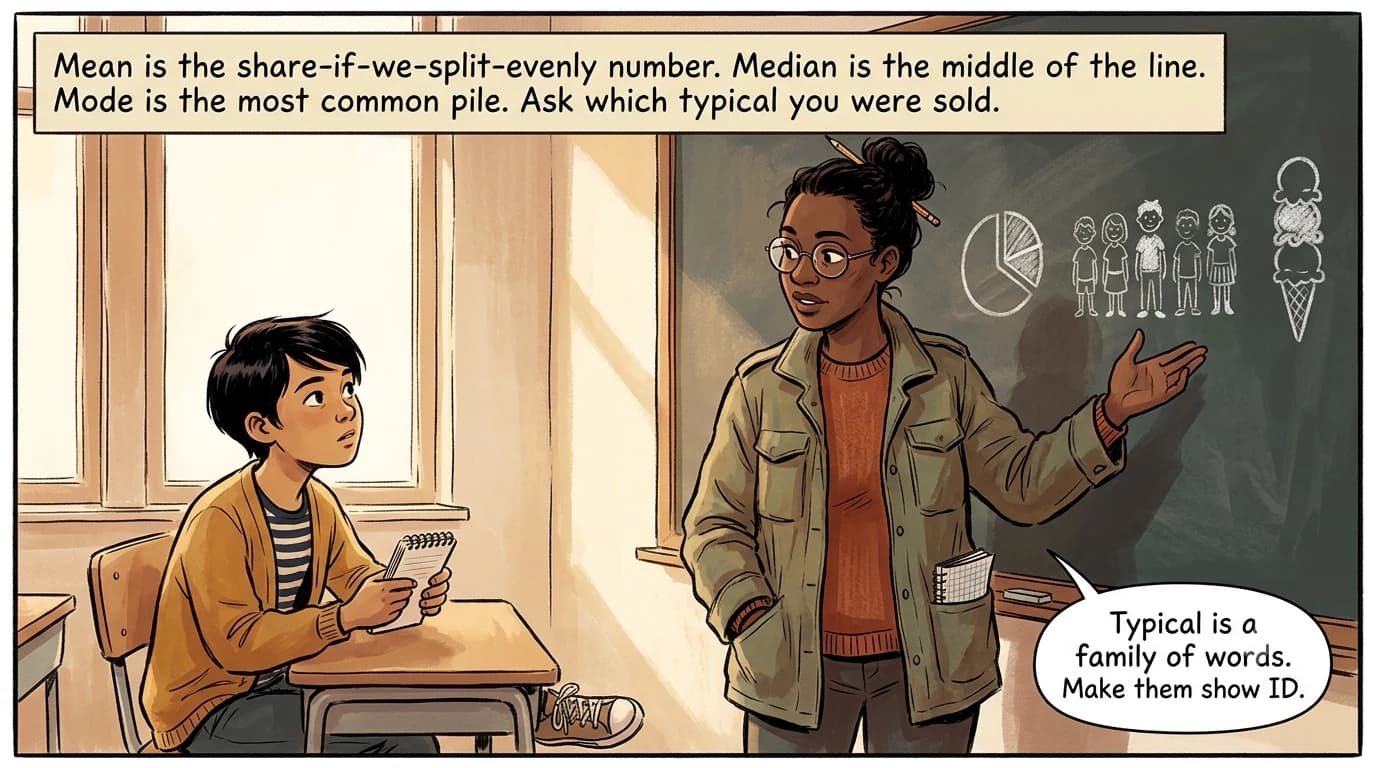
A researcher at a chalkboard matches three kinds of typical — mean, median, and mode — to simple classroom props.
Mean is the share-if-we-split-evenly number. Median is the middle of the line. Mode is the most common pile. Ask which typical you were sold.
Nia: Typical is a family of words. Make them show ID.
Panel 11
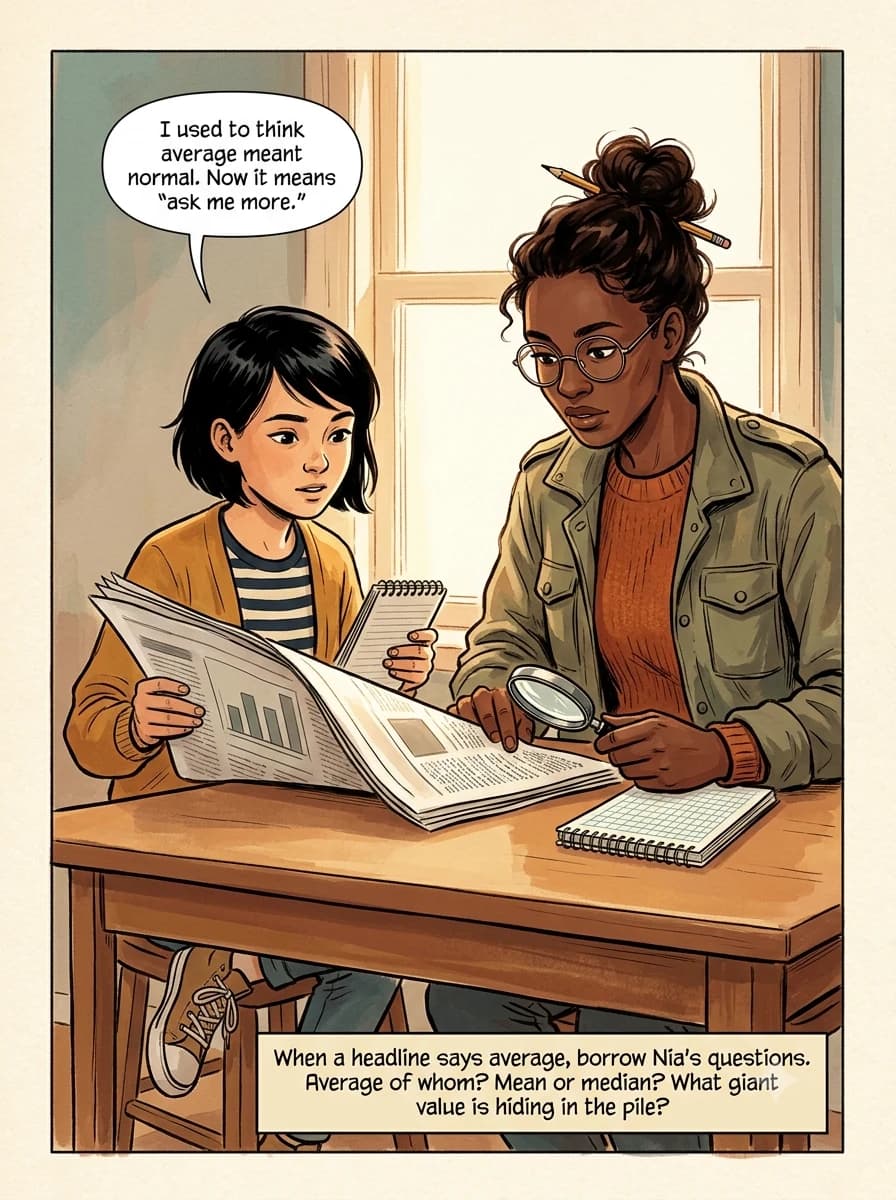
A kid and a researcher examine a newspaper graphic about average income, magnifying the fine print.
When a headline says average, borrow Nia's questions. Average of whom? Mean or median? What giant value is hiding in the pile?
Jules: I used to think average meant normal. Now it means 'ask me more.'
Panel 12
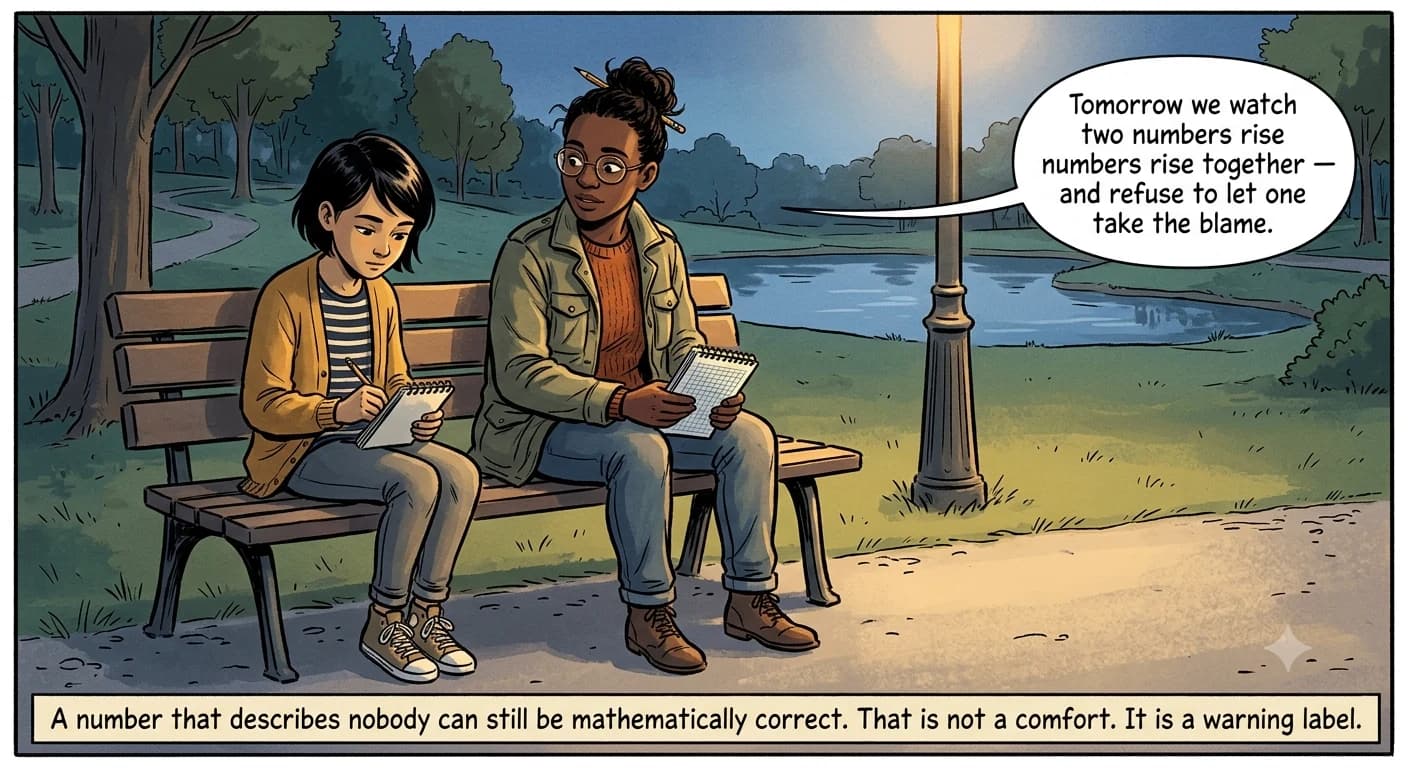
At dusk a kid writes questions about averages in a notebook while a researcher hints at tomorrow's lesson.
A number that describes nobody can still be mathematically correct. That is not a comfort. It is a warning label.
Nia: Tomorrow we watch two numbers rise together — and refuse to let one take the blame.